

-PLEASE SCROLL DOWN-
CELEBRATING 135 YEARS
1891 - 2026
— Five generations of —
fine antique dealing
-PLEASE SCROLL DOWN-
-PLEASE SCROLL DOWN-
-PLEASE SCROLL DOWN-
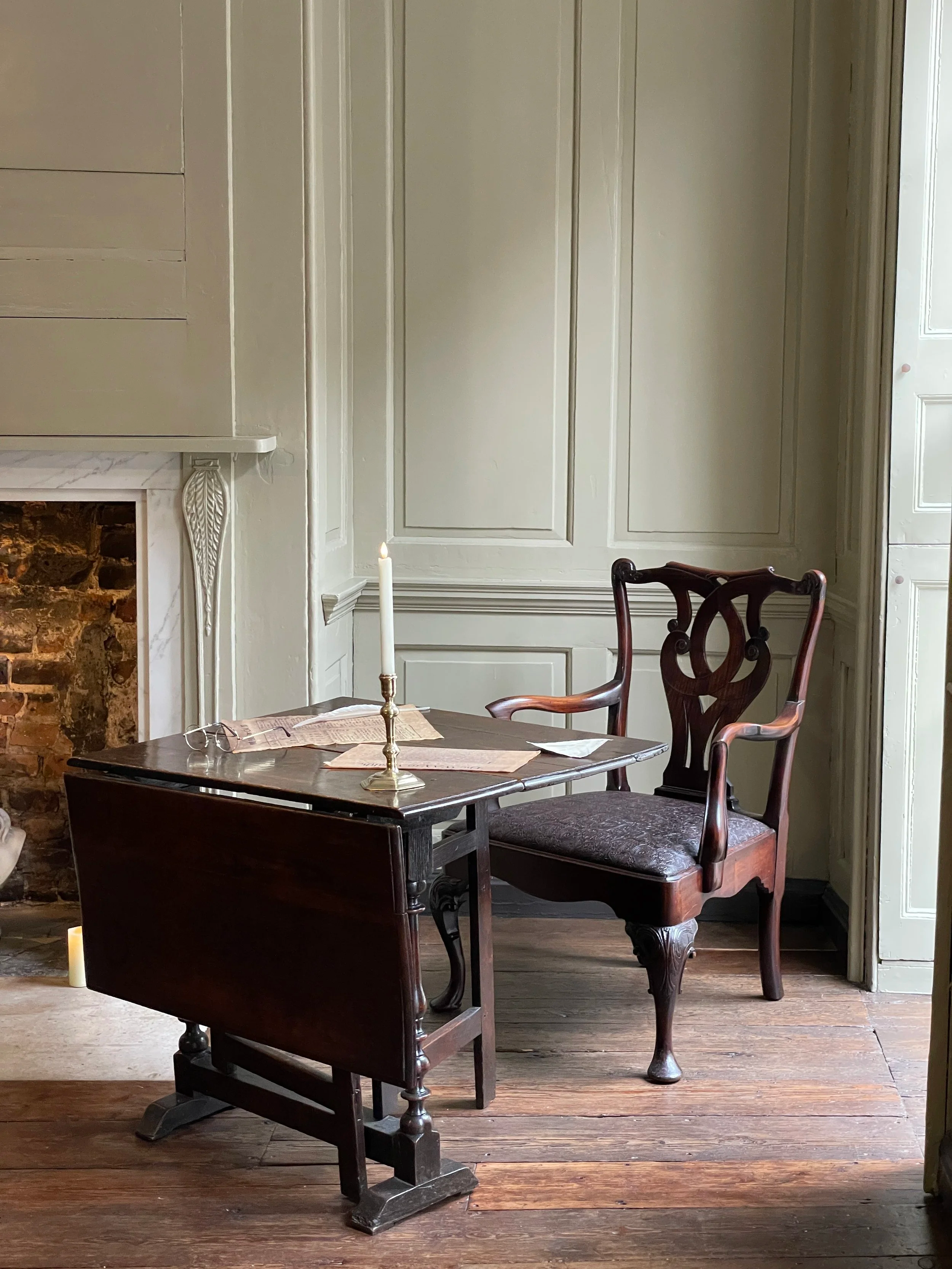
Authentic English Antiques Worldwide Since 1891
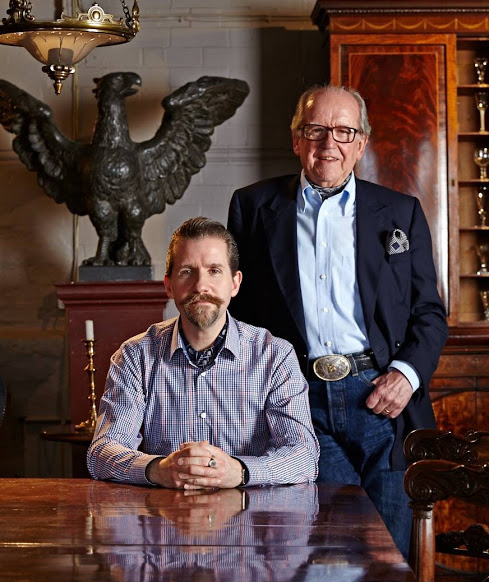
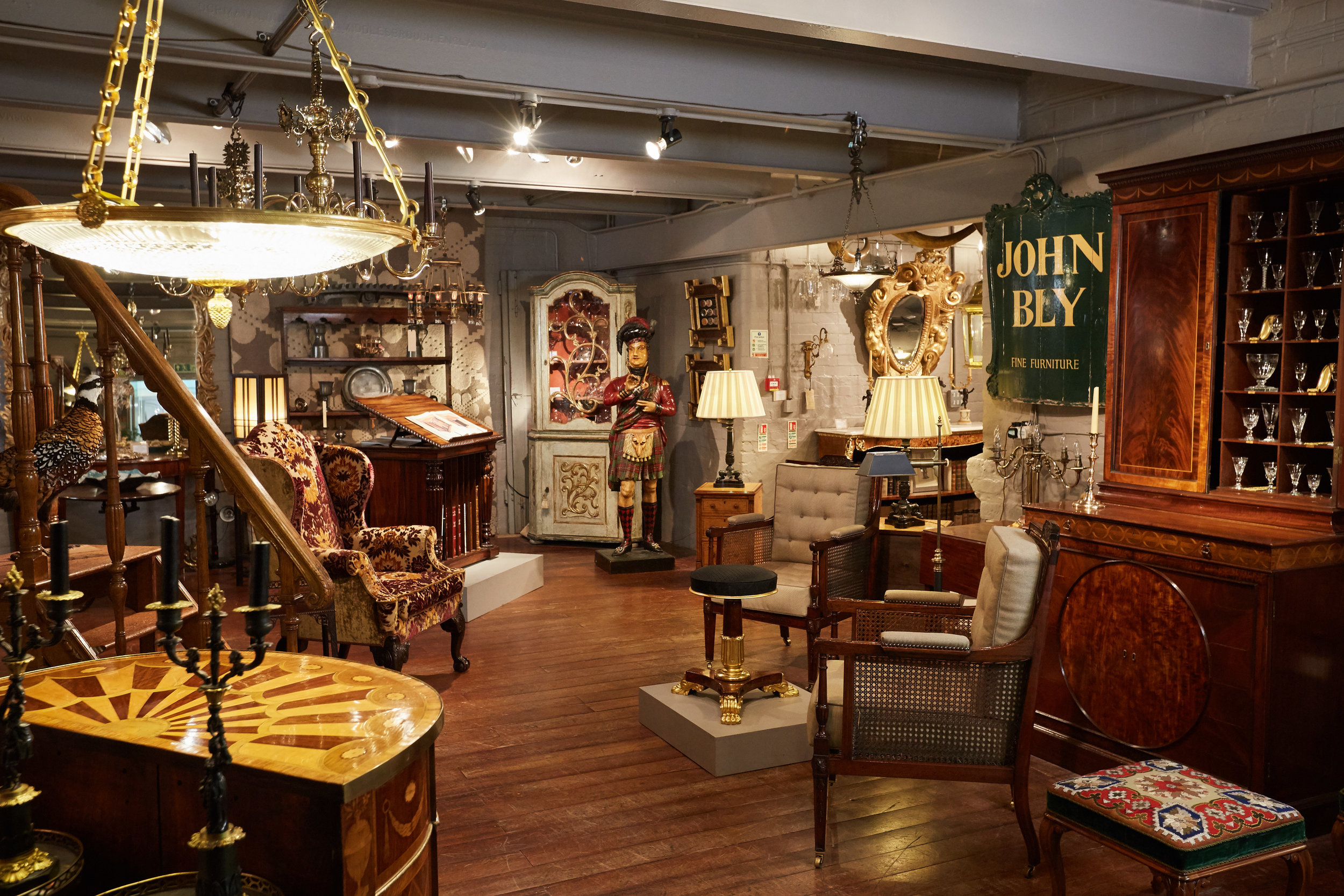
The name John Bly has been synonymous with fine English antiques and decorative arts since 1891. Now in its fifth generation, the family business combines a carefully selected collection with specialist sourcing and expertise in furnishing period properties for private clients, interior designers and historic houses in Britain, America and worldwide.
An Established Reputation
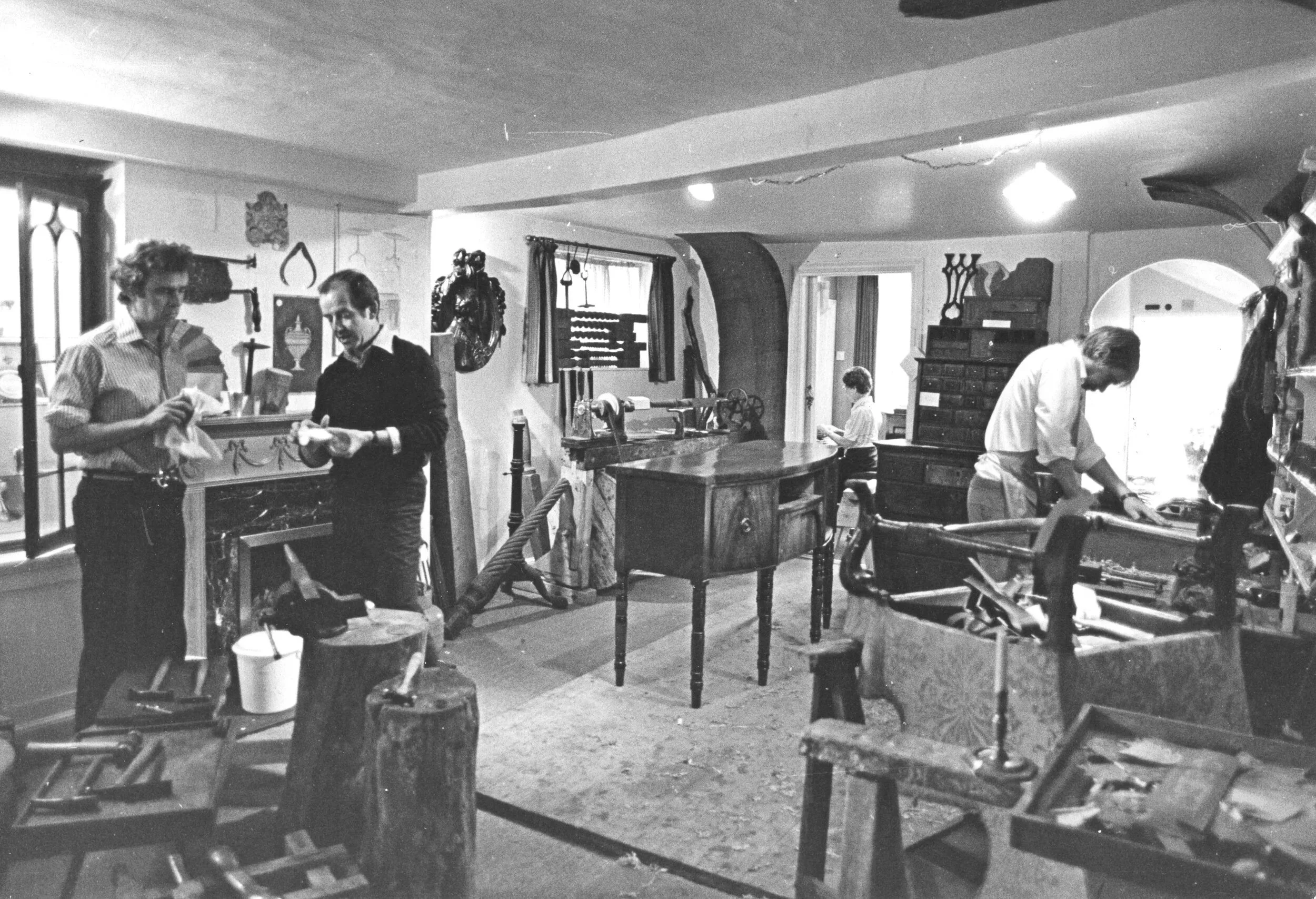
Although our archives show a letterhead announcing "John Bly – Antique Dealers since the Reign of William IV", it was in 1891 that the present John Bly's grandfather formally established the company in Tring, Hertfordshire, where it remains to this day. From the early years, John Bly has been at the forefront of the antiques market and a leading name in the industry with an enviable client portfolio of collectors, celebrated interior and landscape designers, as well as some of the world's greatest museums and stately homes.
What We Offer
John Bly has specialised in fine English furniture, silver and decorative arts since 1891, with particular expertise in the Georgian and Regency periods. Browse our current collection of period tables, seating, cabinets, silverware, lighting and decorative arts.
Alongside our collection, we offer an interior design and furnishing consultancy for private clients, interior designers and historic properties, together with a custom sourcing service for those seeking a particular piece. Worldwide shipping can be arranged. We also provide professional valuations and authentication, expert restoration and personally monitored conservation.
Furnishing a Period Property?
Whether you are furnishing a single room or an entire historic house, we would be pleased to discuss how our experience in English antiques, specialist sourcing and period interiors might assist.
A Progressive Approach
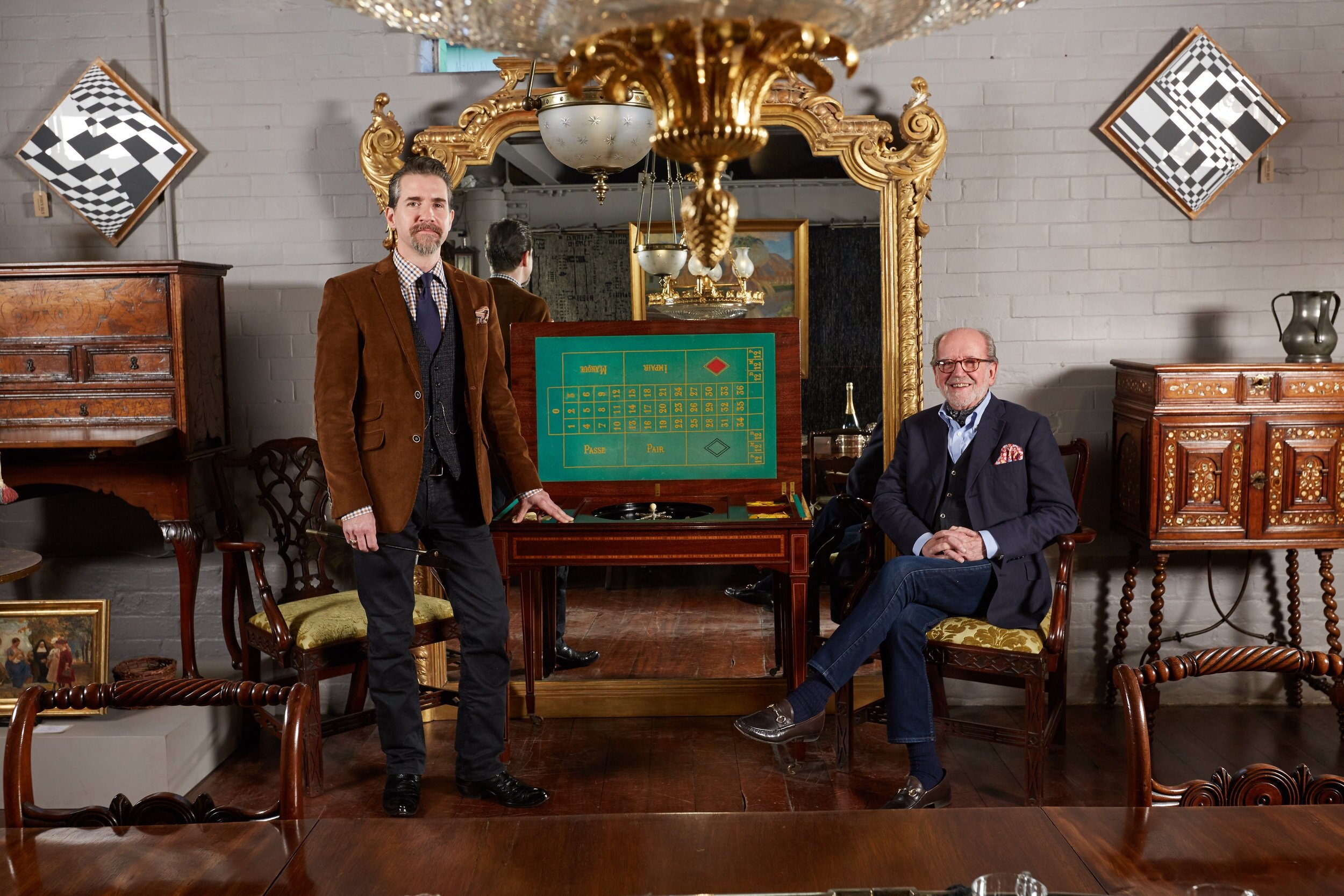
While being one of the oldest established antiques dealerships, John Bly is also one of the most progressive. The most recent addition is Studio Bly International, developed by James to create and provide unique items in any category for private clients and designers worldwide.
John Bly is a member of LAPADA. Watch "In Conversation with James" to learn more about our aims and services.
FAQ Section:
Q: Where is your London antique shop located? A: Our business is based in Tring, Hertfordshire, with easy access from London. We serve collectors and interior designers nationally and worldwide.
Q: Do you offer antique valuation services? A: Yes, we provide professional antique valuations for insurance, probate and sale purposes.
Q: What periods of antique furniture do you specialise in? A: We specialise in Georgian and Regency antiques, including furniture, silverware, lighting and decorative arts.
Q: Can you ship antiques internationally? A: Yes, we offer worldwide shipping with full documentation, insurance and customs support. We regularly ship to collectors across Europe, the USA, Commonwealth countries and beyond.
Q: Do you buy antiques? A: We are always interested in acquiring quality English antiques. Contact us with details and photographs for a confidential assessment.
Q: Do you offer antique restoration services? A: Yes, our skilled craftsmen provide expert restoration and personally monitored conservation for period furniture, maintaining authenticity whilst ensuring longevity.
Latest Newsletters
Our Inventory
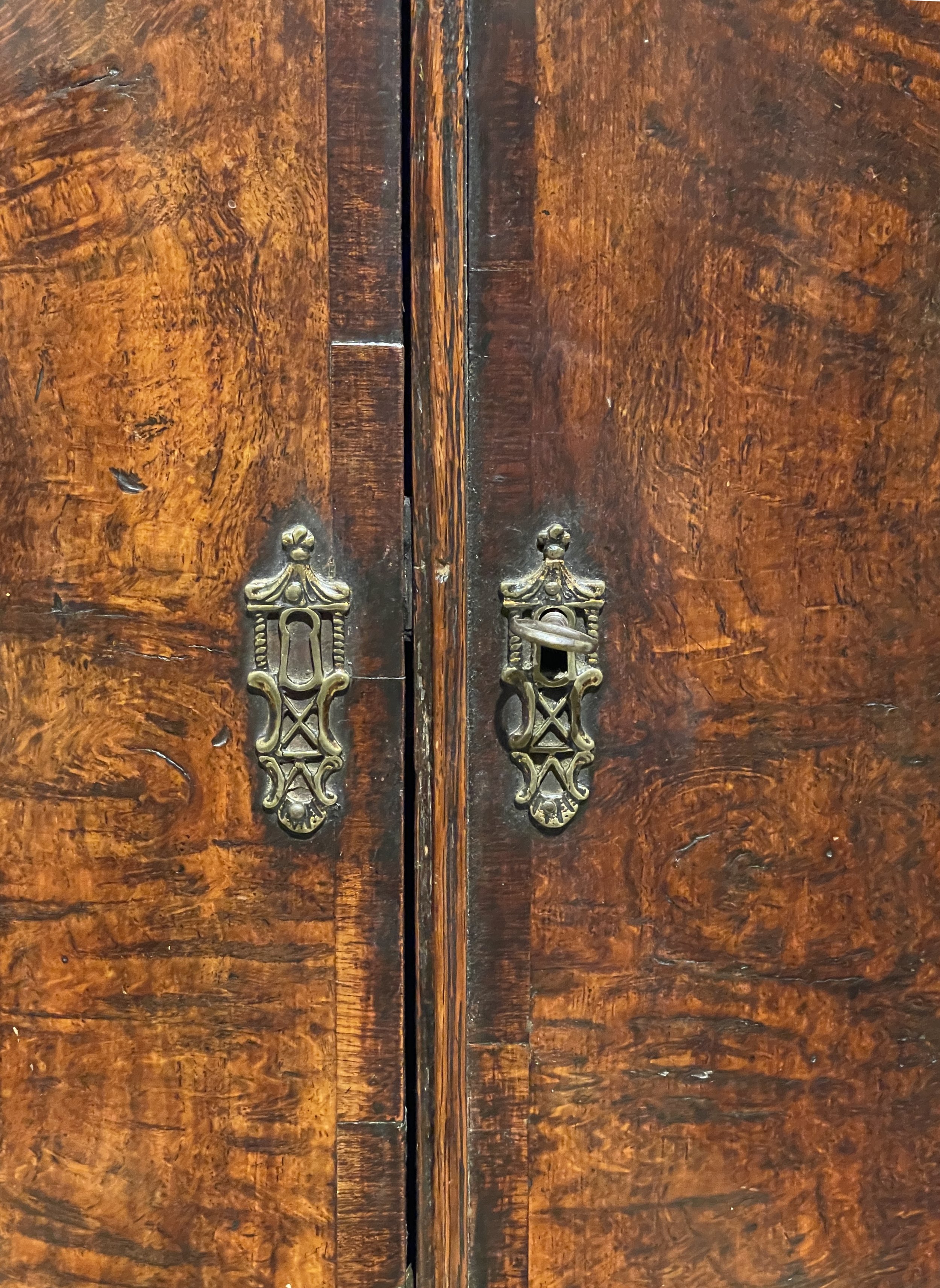
An unusually fine George II period bow front hanging corner cupboard decorated with gloriously coloured and highly figured pollard oak veneer, its exemplary patina reflecting years of care. The interior retaining early faded green paint and three fitted shelves.
Circa 1735.
Condition:- Excellent with signs of careful use to the interior.
Overall width 28” / 71 cm. Overall depth 20” / 51cm. Height 42” / 107 cm.
£2,250

A charming early 19th century mahogany stand and jardiniere in the manner of Thomas King.
The top containing a tin liner supported by a ring turned stem standing on a triform base with bun feet.
The base and top with applied roundels, often incorporated by this designer's workshop.
Circa 1825
Height: 28" / 71cm
£2,750
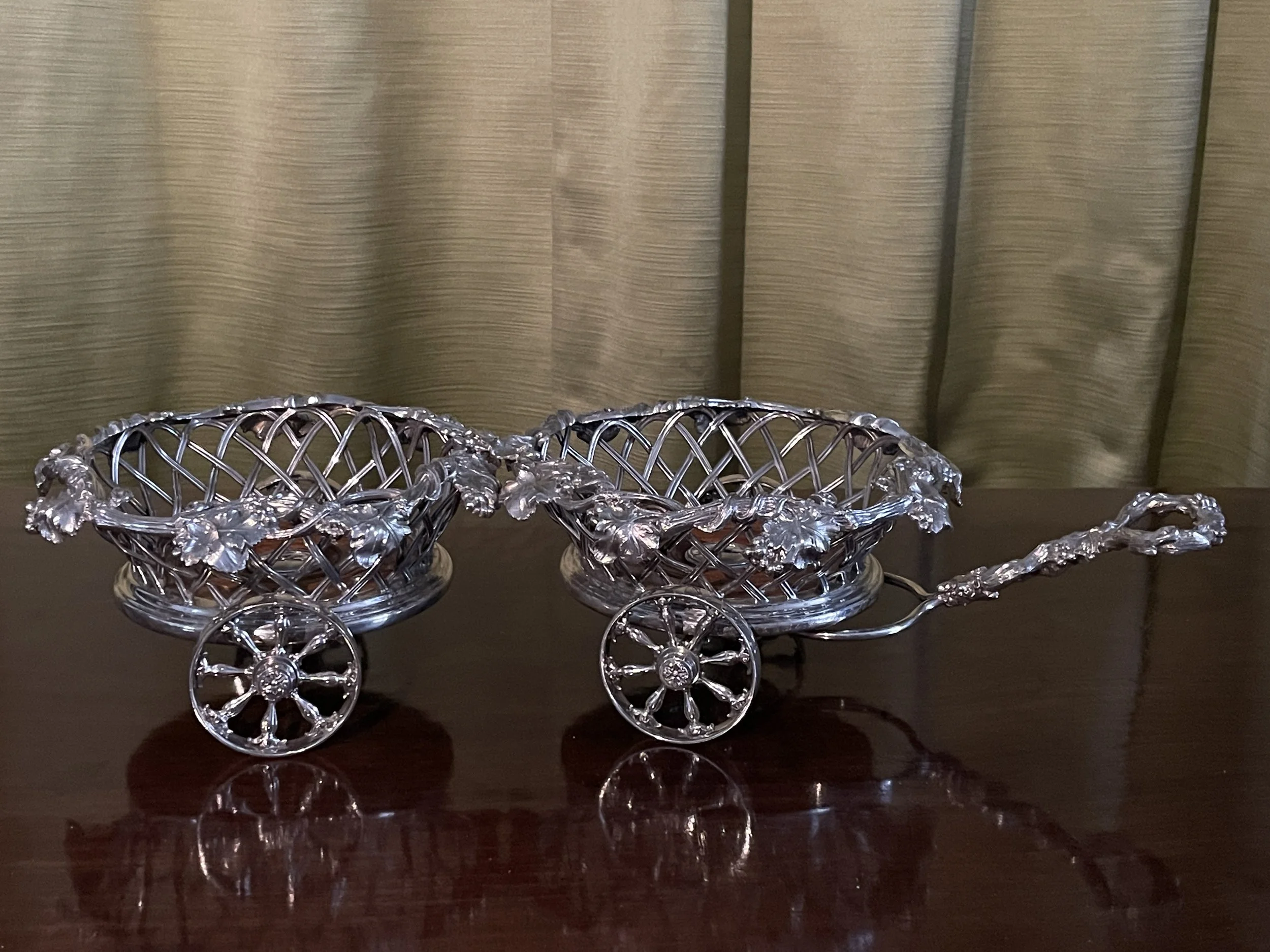
An exceptionally fine and rare mid-Victorian Sheffield Plate Decanter Trolley formed as two open weave baskets topped with cast and finely chased vines, vine leaves and bunches of grape borders, the handle cast to match and mobilised on four classical chariot wide rim wheels with baluster spokes and foliate medallion hubs. The central silver boss to each turned wood base plain as original.
A presentation inscription in copperplate script on the front lower rim reads:- “From WS & CEB to Alfred Cheek Esq as some slight return for a long course of unwearied kindness & attention”
Trolley: Overall Length 19” (48.5cm) Width 7¾” (19.5 cm) Height 4”. 10 cm Internal diameter of each coaster: 4¼" (11cm)
£2,650
The matching pair of coasters formed as open weave baskets topped with cast and finely chased vines, vine leaves and bunches of grape borders.
Coasters: Diameter 7½” (19cm) Height 2” (5cm) Internal diameter of each coaster: 5" (12.5cm)
£1,750
All by Elkington & Co. Birmingham and in immaculate condition throughout.
The decanters are available separately.
Register Interest
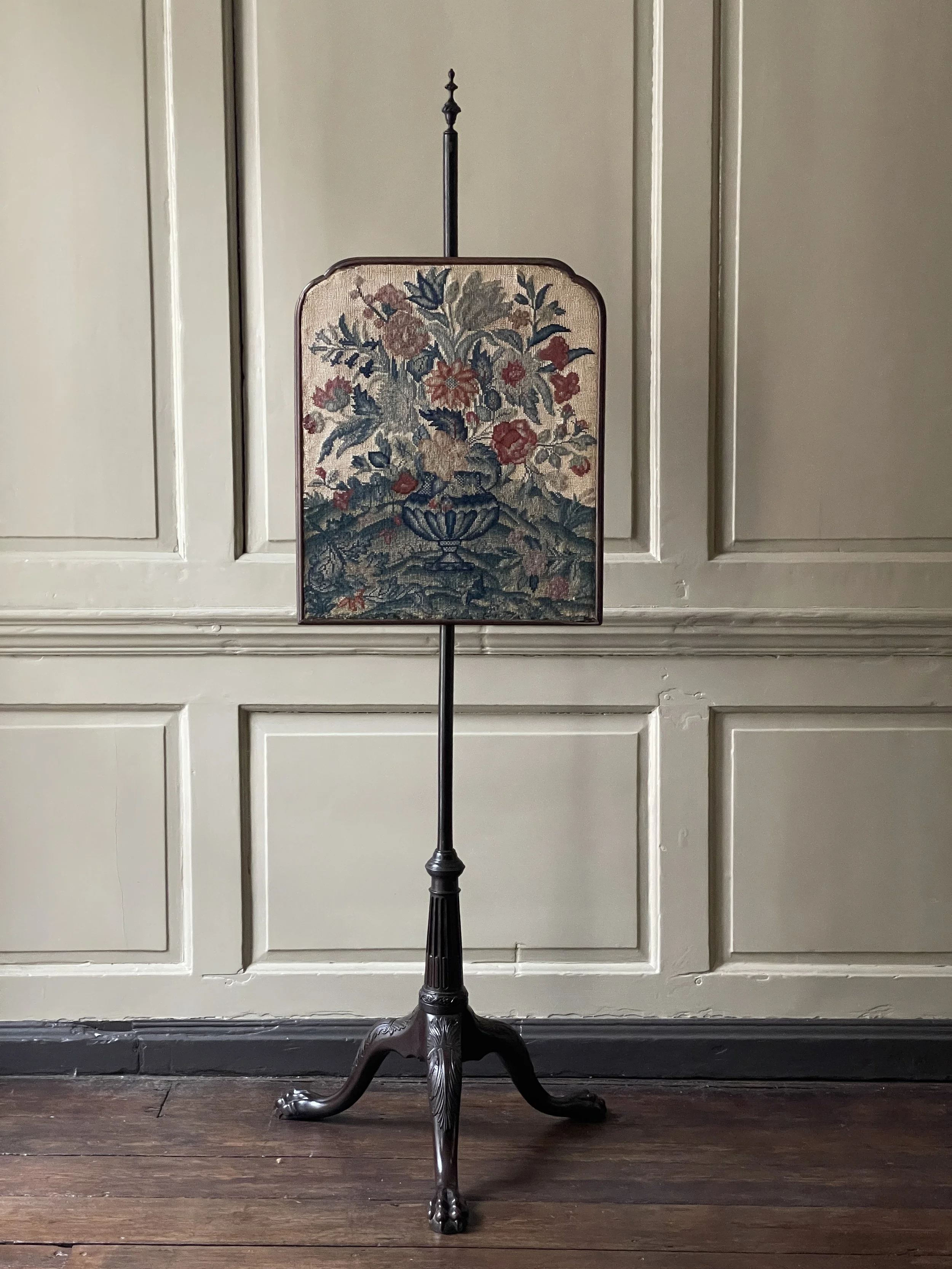
A particularly fine example with tapered and stop fluted stem and flower carved guilloche collar on a fine tripod base. Each leg with bound carved foliage terminating in an elongated claw and ball foot. Circa 1755
23” wide, 23” deep, 68½” high. 59cm by 59cm deep by 175cm high.
The base £4,250.
The exquisite needlework panel depicting a vase of flowers, circa 1735 available separately.
Register Interest
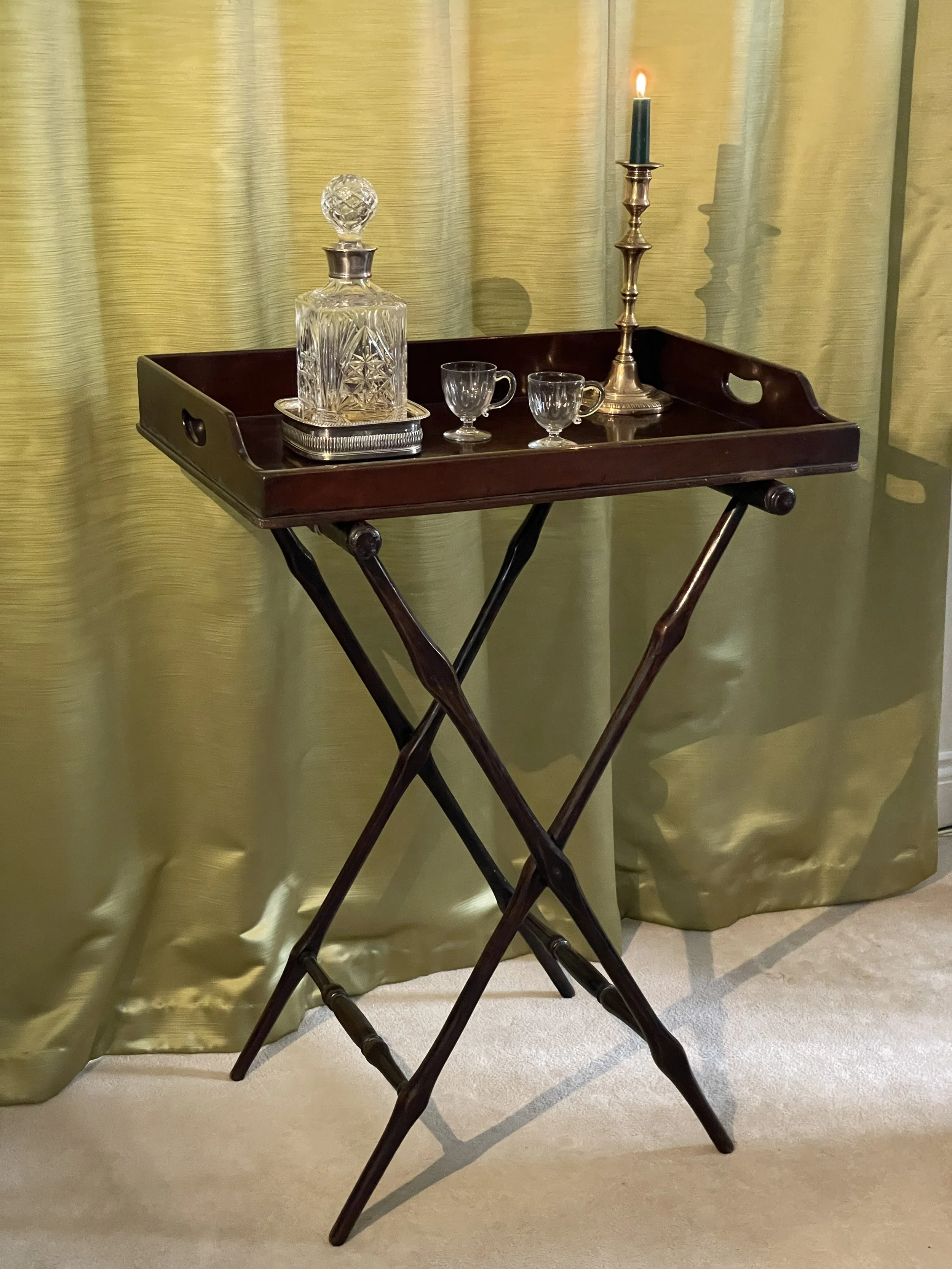
The well proportioned tray with gallery to three sides, dropped front edge and pierced handles on an elegant folding stand with turned stretchers.
In excellent condition and of good rich colour.
Circa 1825
Width: 26" (66cm) Depth: 17½" (44.5cm) Height: 37 (94cm) including gallery.
£2,650
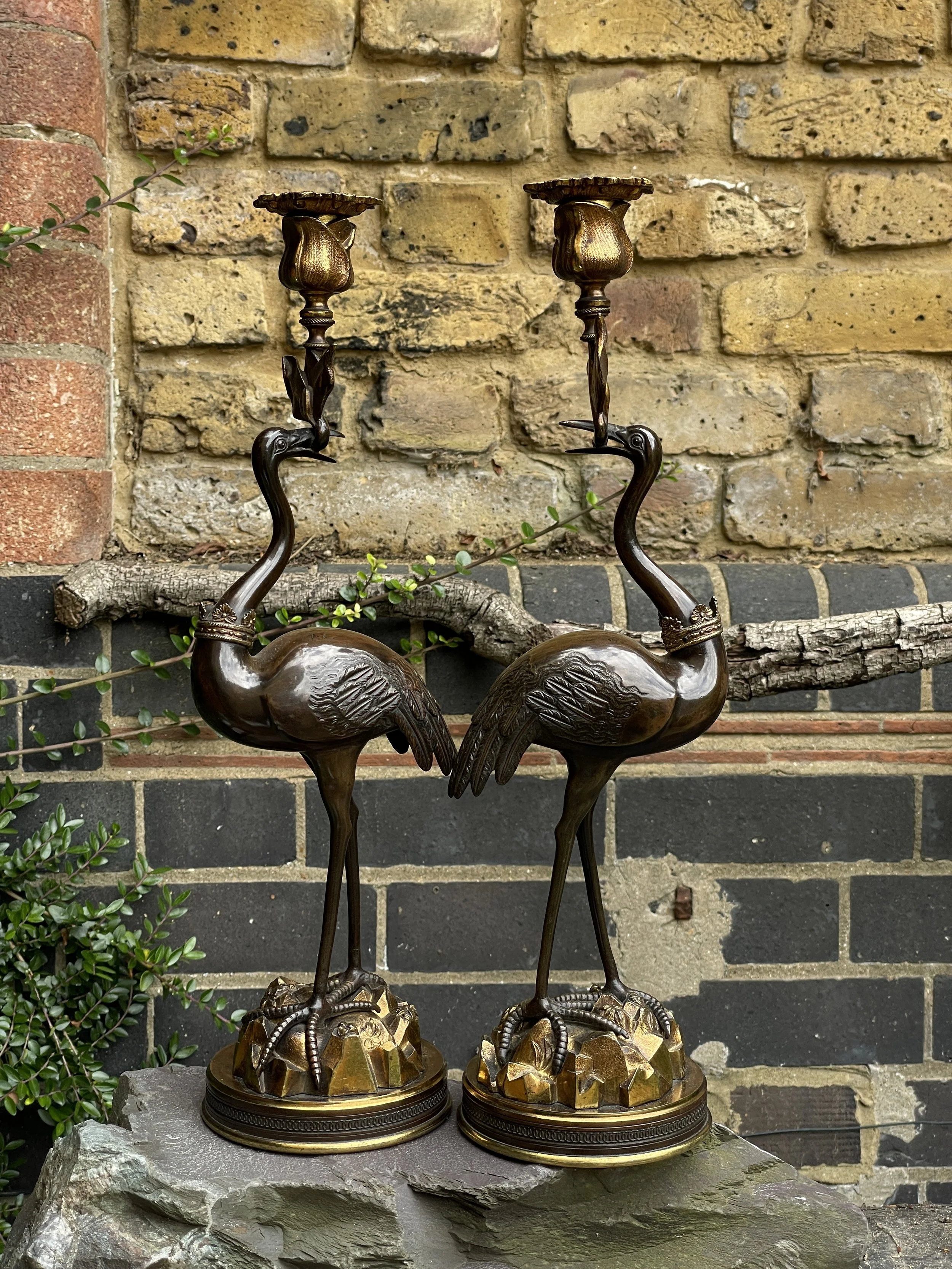
A fine pair of bronze cranes on parcel-gilt rockwork bases, each with a coronet to the neck and holding in its beak an opened oak leaf surmounted by a candle sconce and original drip-pan.
Cranes being emblematic of all the virtues are the heraldic device of several noble families including Gibson of Dublin. Circa 1840
H: 15” (38cm) W: 4.5” (11cm)
£3,850
Register Interest
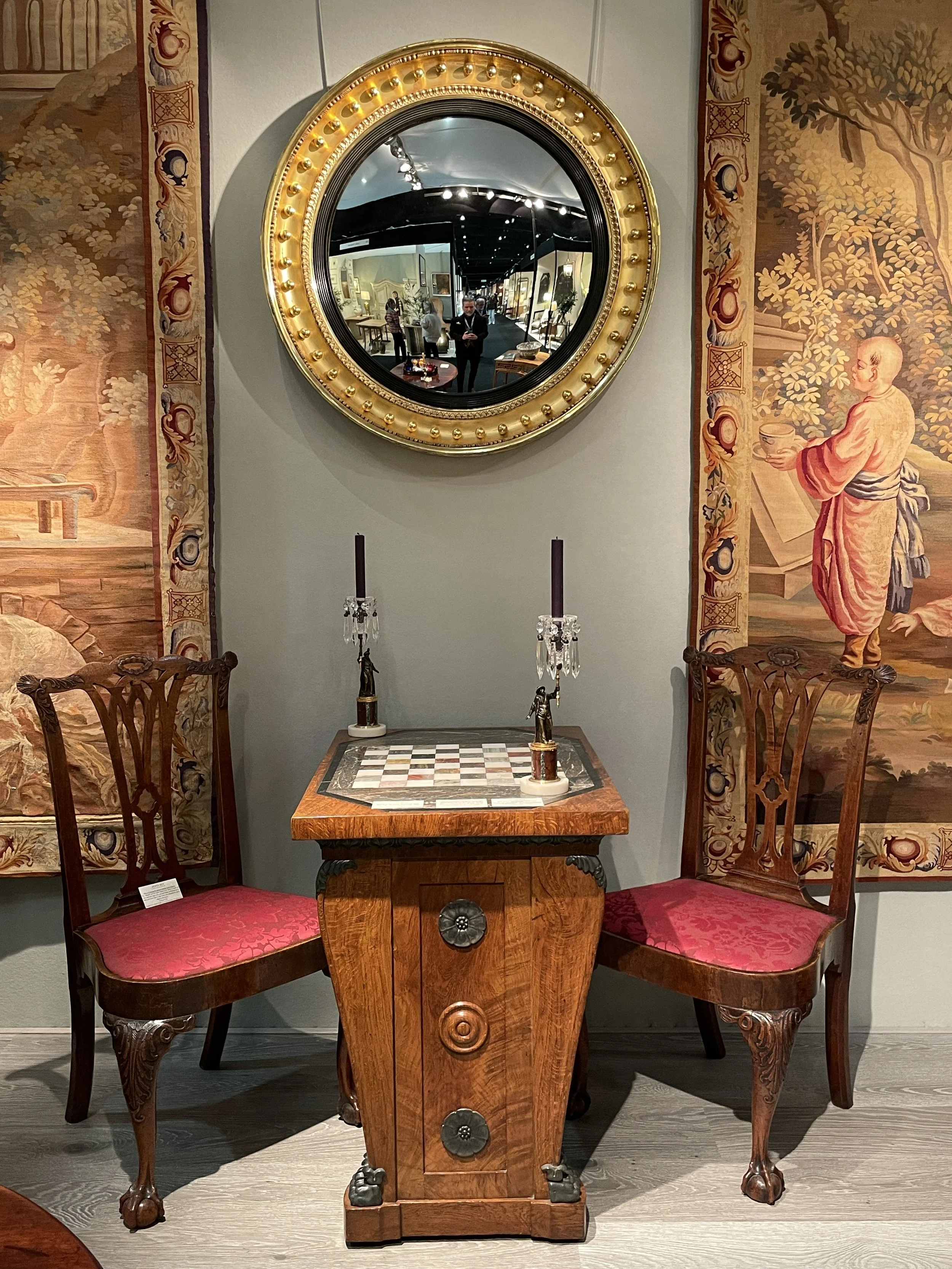
A fine and large early 19th century convex mirror with ebony slip and carved giltwood frame.
Retaining the frame makers label, S.B. Fuller, London.
Circa 1820
Diameter: 34” / 86.5cm Depth: 3” / 8cm
£9,500
Although we associate this type of mirror mostly with the early 19th century interiors they have been around for centuries; 12th century European glass blowers made spheres of glass, sections of which could be used as small mirrors.
Thomas Sheraton wrote in his Cabinet Dictionary of 1803: “The properties of such mirrors consist in their collecting the reflected rays into a point by which the perspective of the rooms in which they are suspended presents itself on the surface of the mirror and produces an agreeable effect.”
So from humble origins to modest “Banker’s Eye” mirrors, such as those seen in Dutch Old Master Paintings of the 16th century, to opulent and highly decorated convex mirrors of the Regency era. The one shown here is particularly elegant, of superb quality and relatively paired back form retaining it’s makers label.
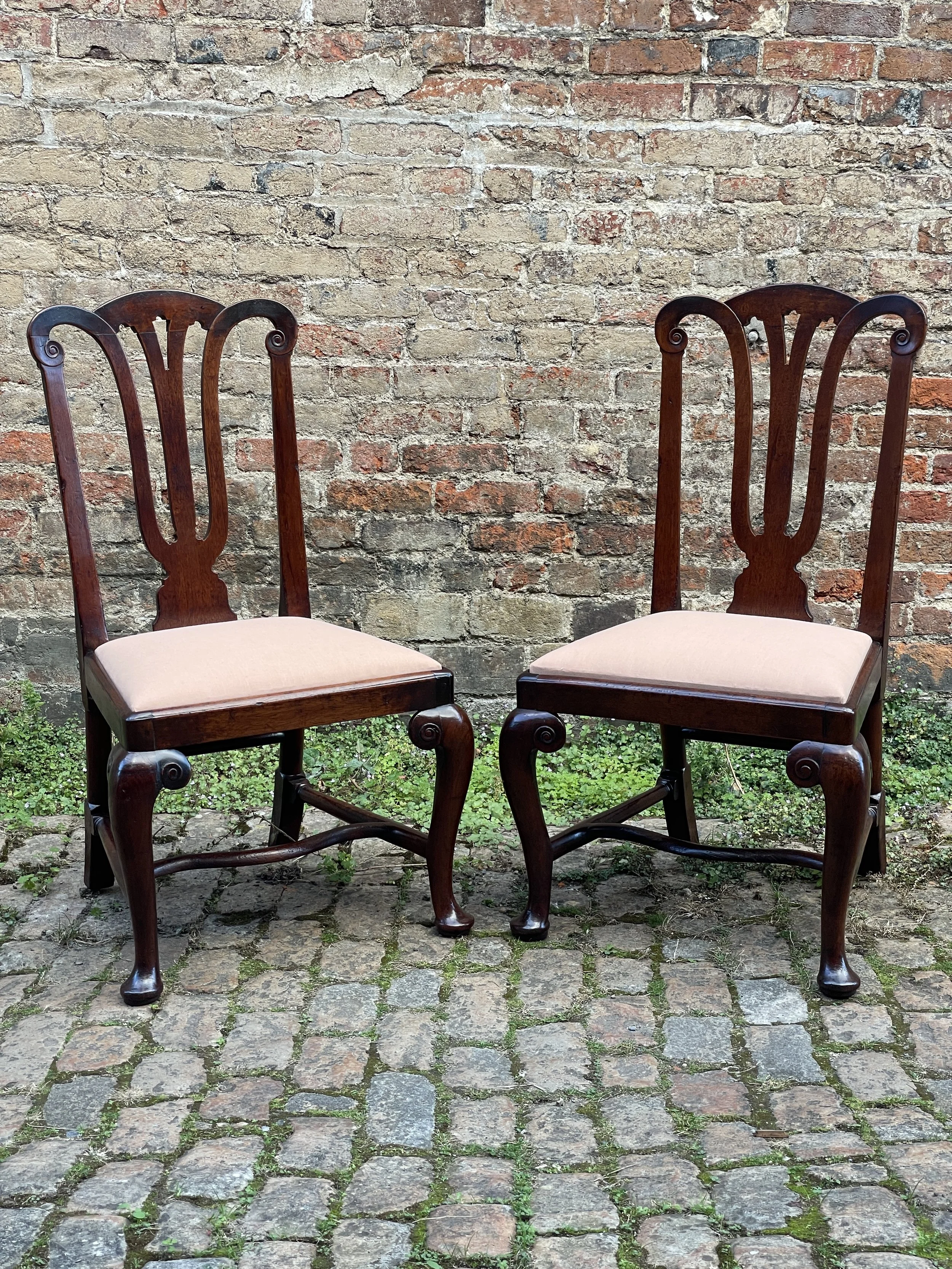
A remarkably handsome pair of George II period side chairs of American walnut.
Each with a triple-pierced formalised vase-on-pedestal profile back, the sides terminating in a boldly drawn scroll supported by the outer column uprights, over a straight rail drop-in seat on well-formed cabriole legs terminating in pad feet and topped with a deep scroll at the knees replicating the back. The turned ‘H’ stretchers have an unusual serpentine curve to the centre part with a straight bar to the back.
The date of circa 1730 - 40 is confirmed by chairs with similar shape and motifs. See The Antiques Directory, Furniture, Judith and Martin Miller, Chief Consultant Editor John Bly, Crescent Books, p. 219, Fig E2, and Early Georgian Furniture, 1715 1740, by Adam Bowett, Antique Collectors’ Club. Chapter Four, particularly ps. 180, 183, 187.
Height: 39.5" / 100cm Width: 22" / 56cm Depth: 22" / 56cm Seat height: 18" / 45.7cm
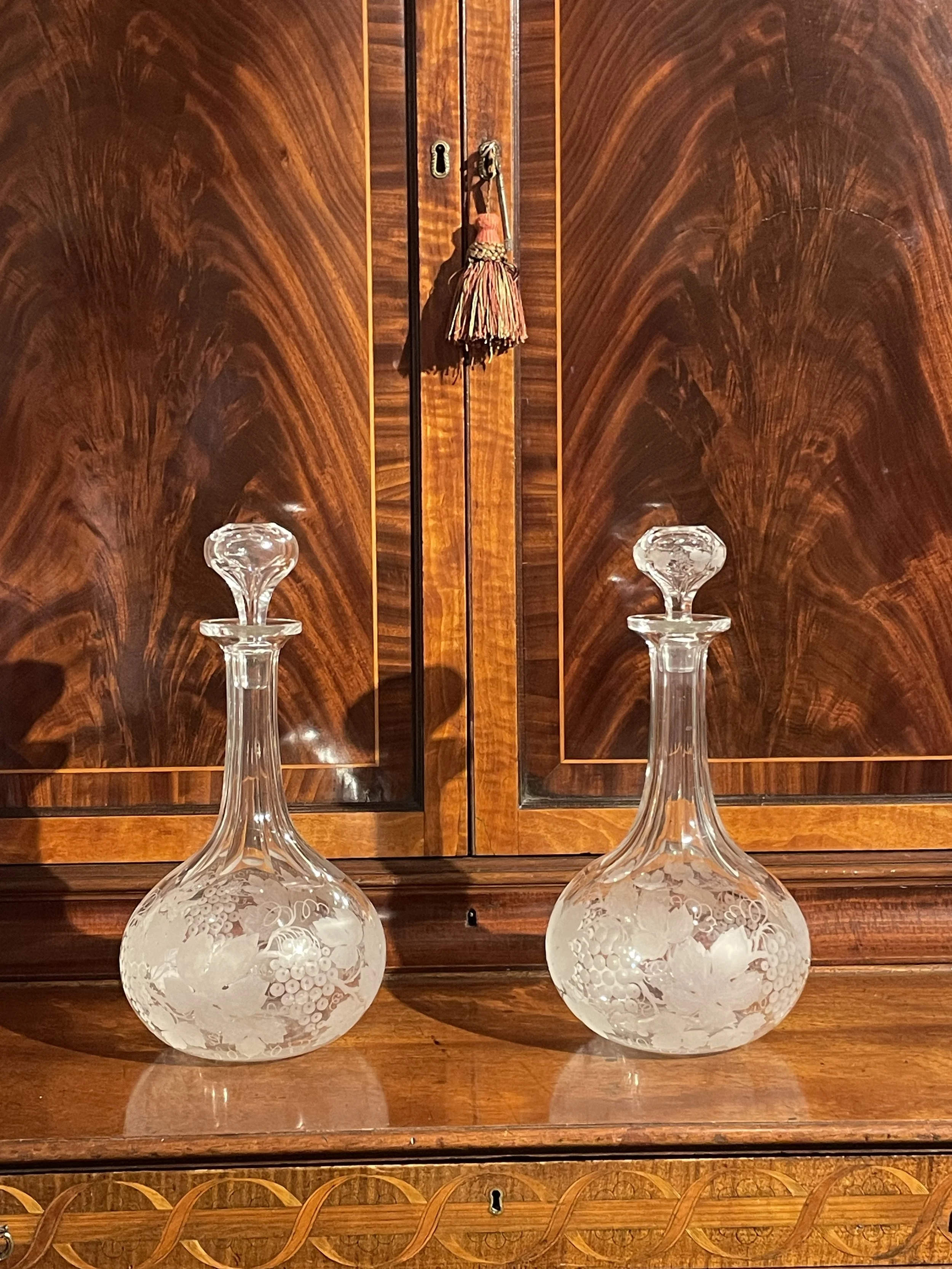
The body of each finely and fully engraved with grape and vine decoration. One with stopper engraved to match, the other plain.
Overall height of both 13.5” 34.5 cm. Diameter 7” 18cm
Condition:- One small chip to the lip of the one with the plain stopper.
The Globe and Shaft decanter design was taken from a typical serving bottle of the late 17th century after which it went out of fashion until being revived and popularised as a formal decanter pattern during the Victorian period c. 1850.
£650
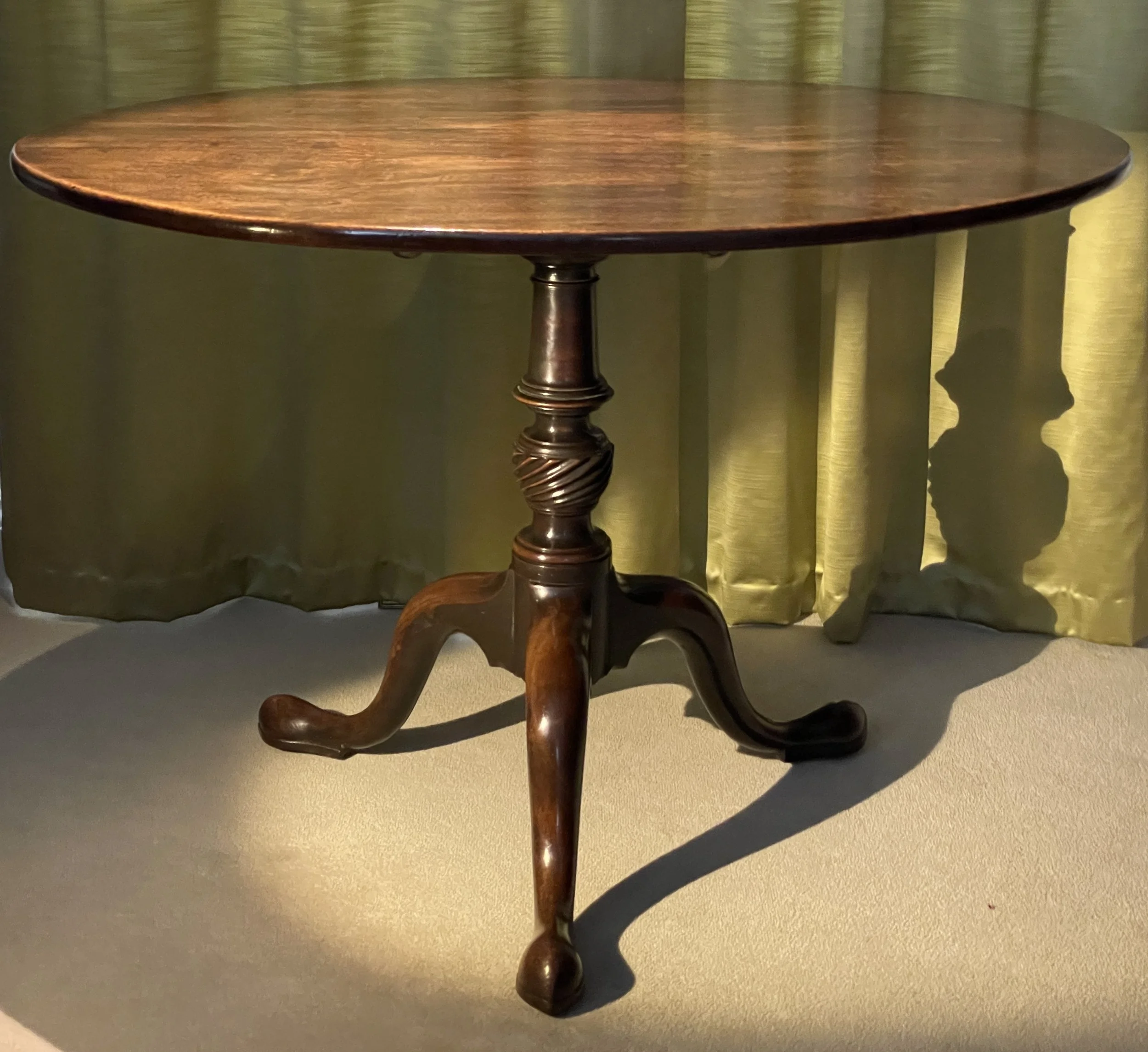
The single plank oval tilt-top top supported by a turned barrel, collared and writhen turned stem on generous cabriole legs with slipper pad feet on concealed castors.
Of superb proportions and in excellent condition retaining the finest colour and patina.
Circa 1745
Height: 28½” (72.5 cm)
Width: 41¼” (105 cm)
Depth: 35½” (90 cm)
£6,500
NB The writhen turning on the tables illustrated in The Dictionary of English Furniture Vol. III, page 207. Fig 15. ca 1740-50 and The Antiques Directory, page 420. Fig 1, ca 1740.
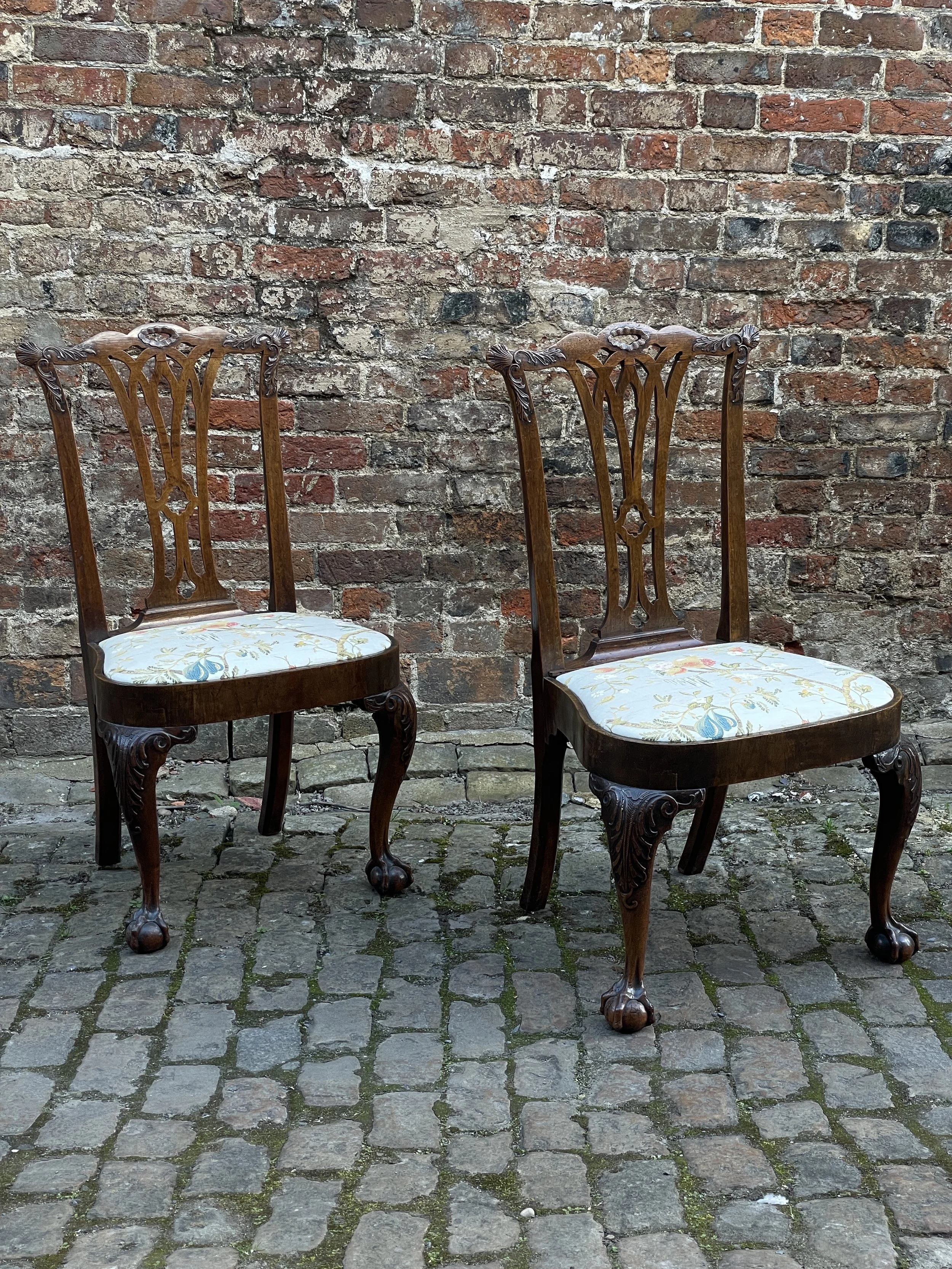
A fantastic pair of George II period walnut Side Chairs, the shaped carved splat backs over drop in seats on the cabriole legs with carved knees terminating in ball and claw feet to the front and chamfered splay legs to the back.
Circa 1750
Height: 37.5" / 95cm Width: 21.5" / 55cm Depth: 19" / 48cm Seat height: 18" / 45.7cm
£3,850
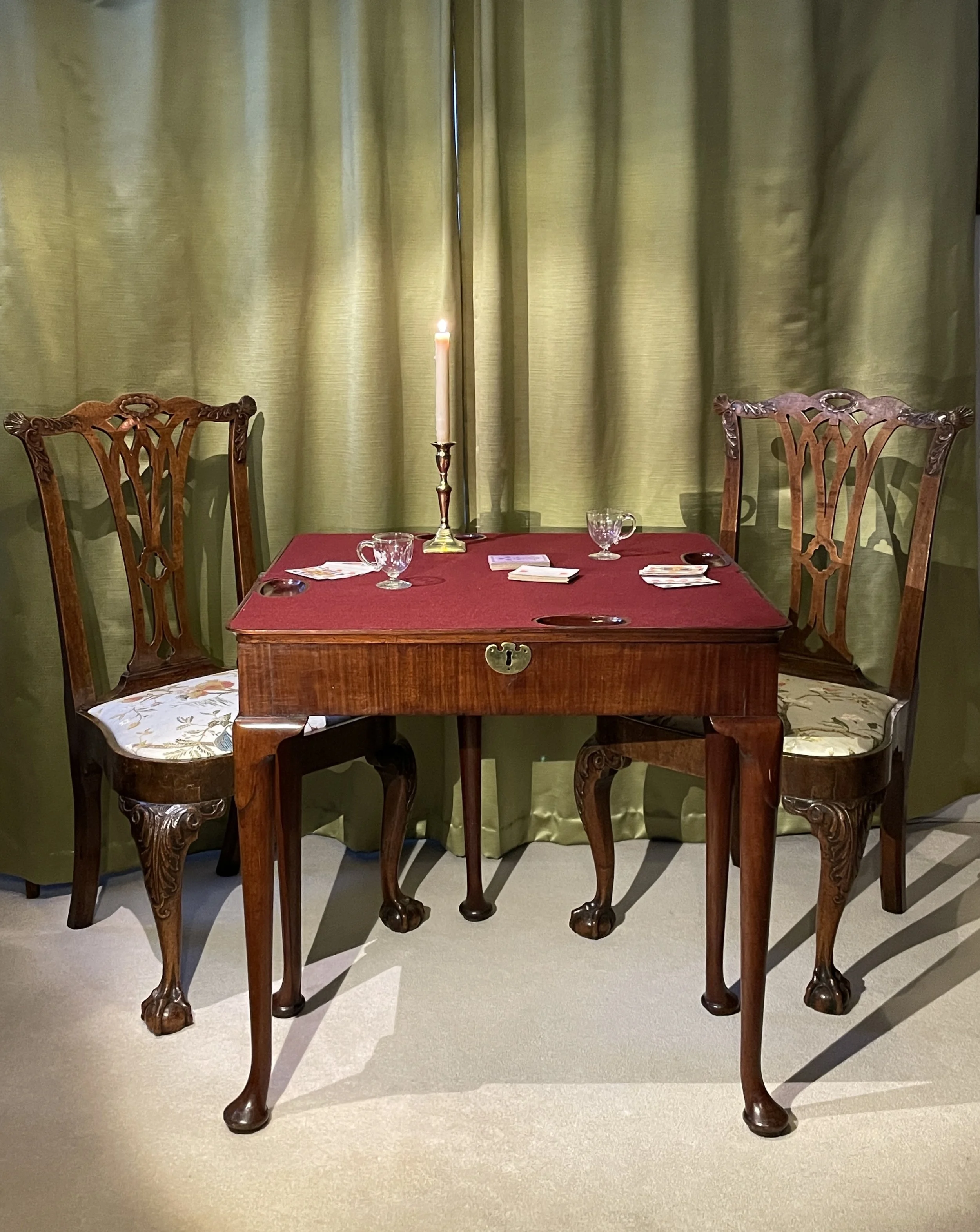
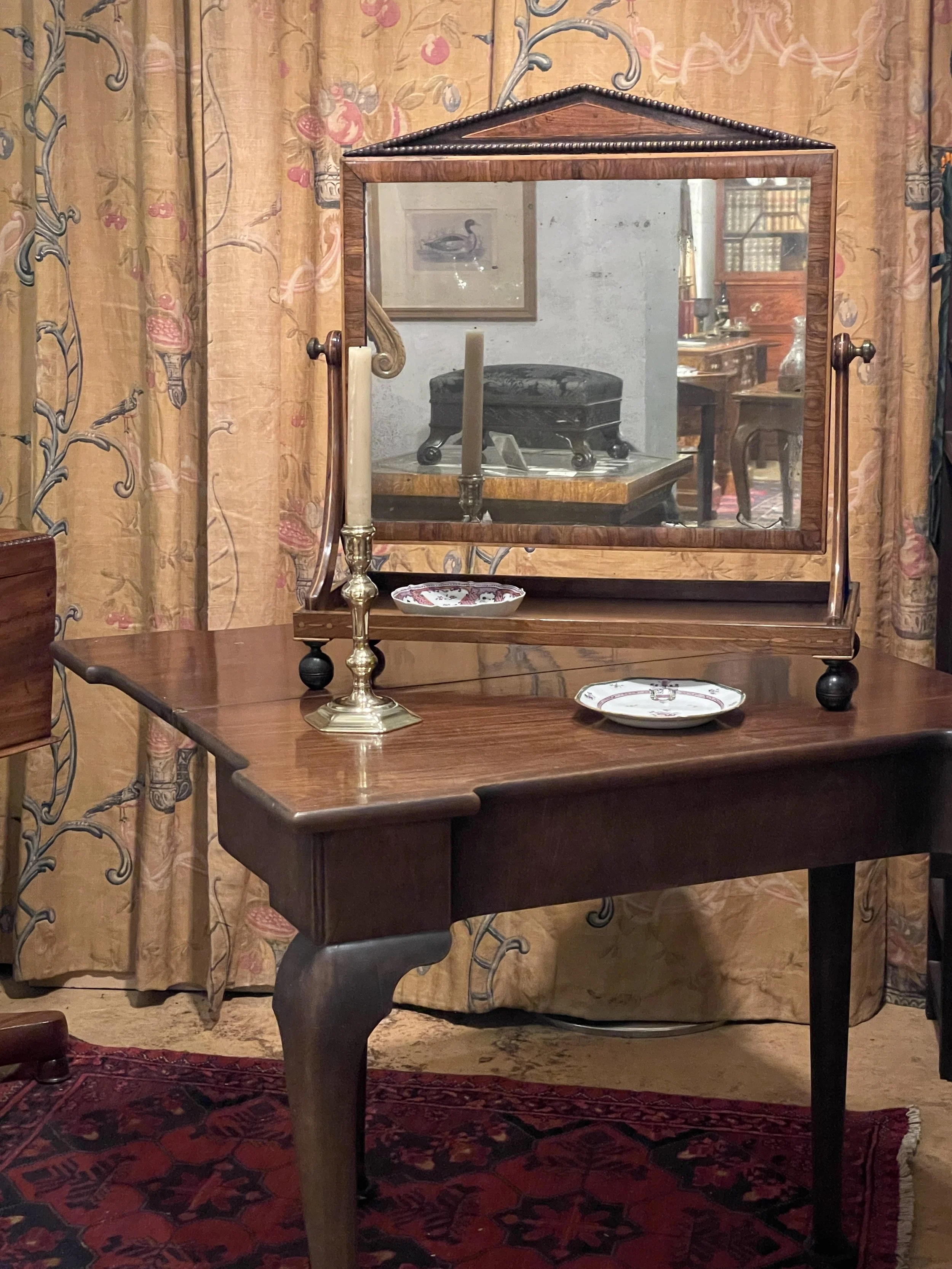
An extremely elegant and versatile George II period mahogany table with two flaps, one for drawing or tea the other dished for cards, with a frieze compartment.
Ref: Fig.19, page 198. Vol. III The Dictionary of English Furniture.
Folding to a shallow console it stands on slender tapering legs with lappet shoulders terminating in pad feet.
Circa 1730
Height: 29 inch (74 cm)
Width: 30 inch (76 cm)
Depth: 15 inch (38 cm) - 30 inch (76cm)
£2,850
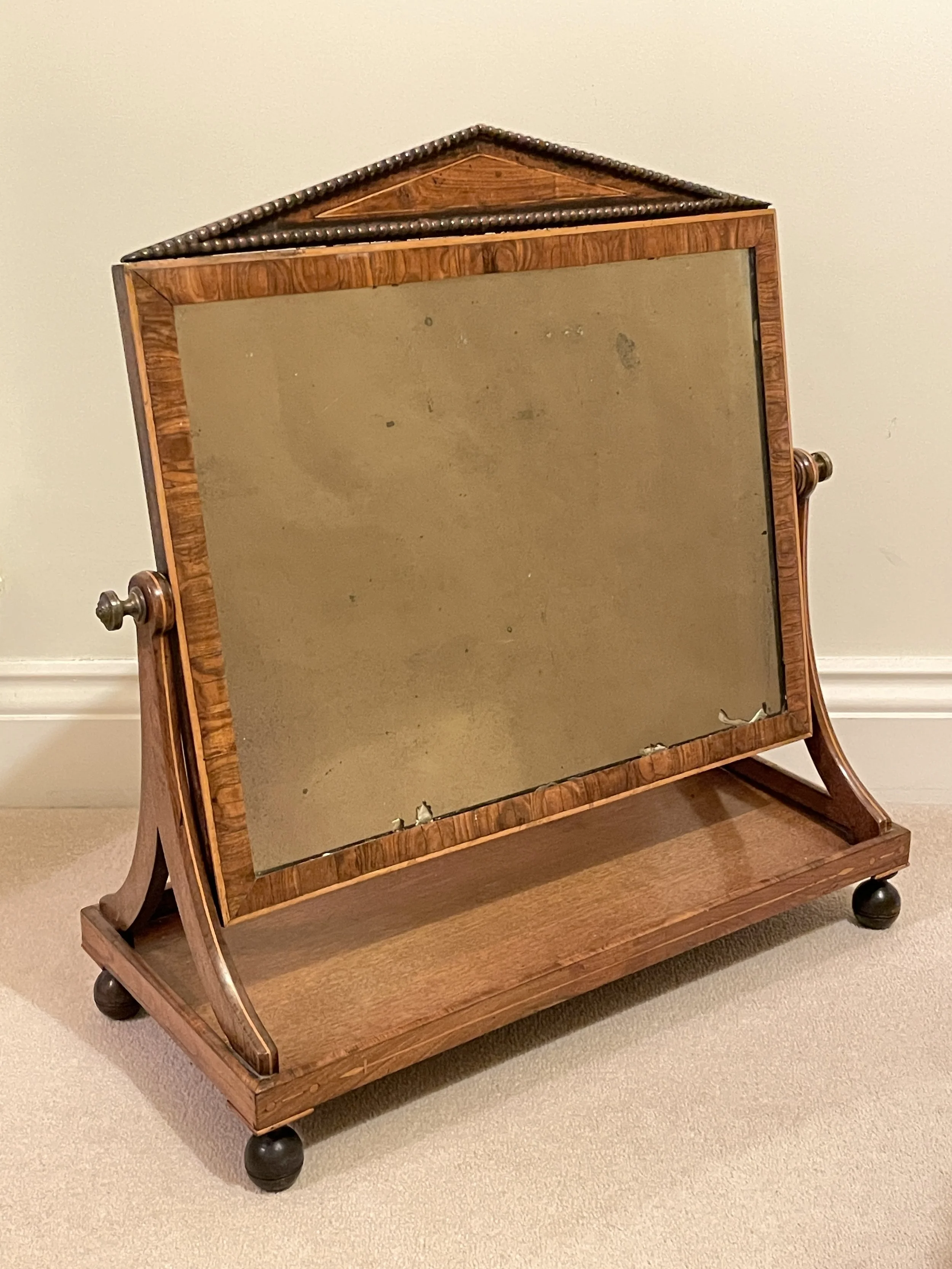
This charming early 19th century dressing or toilet mirror in mahogany with rosewood cross banded frame supported by two splay ends on a vide poche tray; with and boxwood inlay and stringing throughout on ebonised ball feet and retaining its original plate.
Circa 1820
Height: 23¼” (59 cm)
Width: 21¾” (55 cm)
Depth: 8” (20 cm)
£1,250
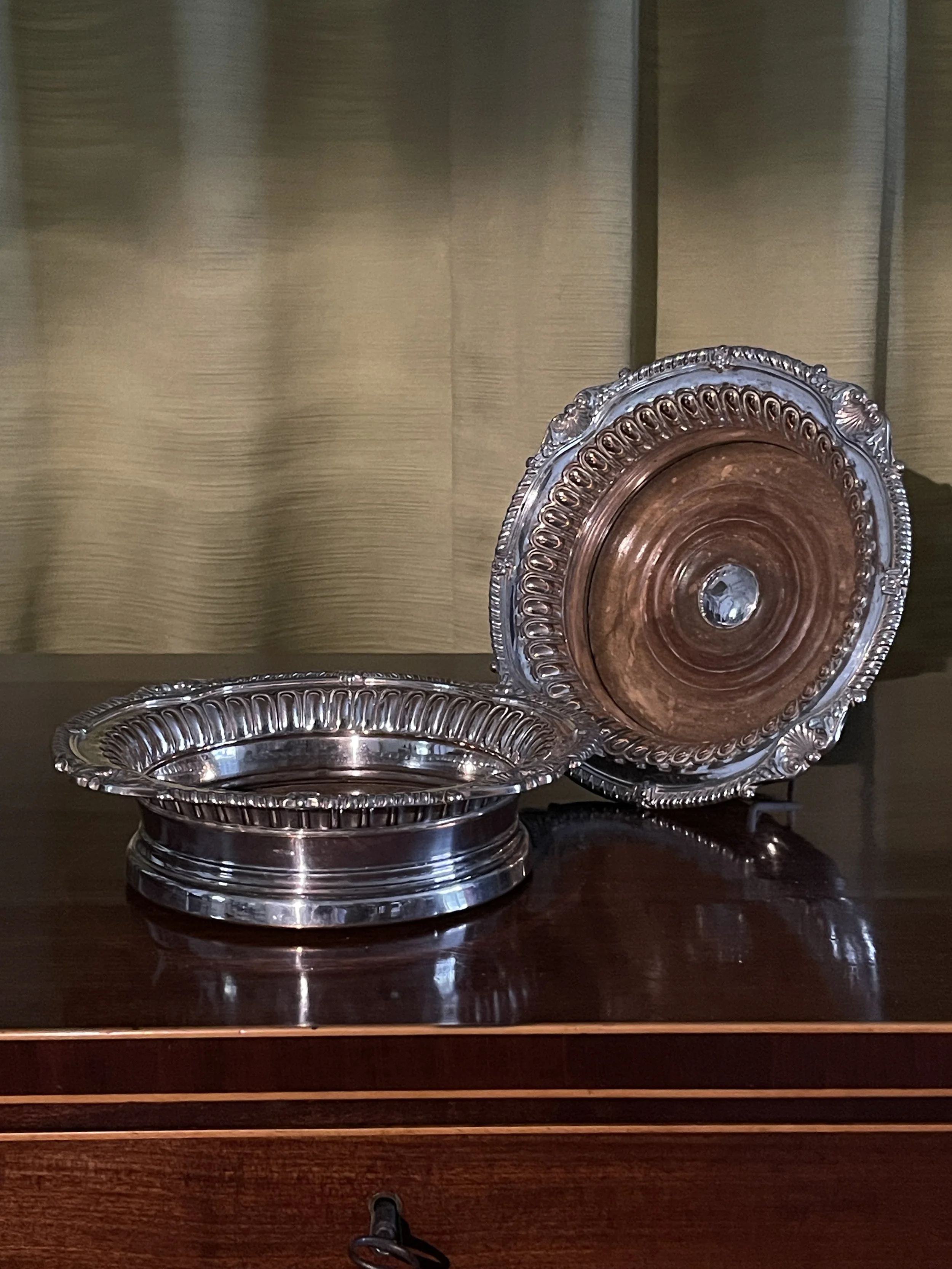
An extremely fine quality Pair of late Regency period Old Sheffield Plate Decanter Stands or Bottle Coasters. The deeply everting sides vertically lobed within stamped, filled and applied silver borders in the Rococo Revival manner with shells, scrolls and spiral lobing. The central silver boss to the turned wood base engraved with a dexter hand holding a book, the crest of Millar “Felicem Reddit Religio.”
Circa 1830.
Of grand proportions, shown with magnum bottles and decanter.
Overall Diameter 7¾” (19.5 cm) Internal: 5“ (12.5 cm) Height 2” (5 cm)
Reserved
Condition: Vertical lobing shows copper. Some staining to the undersides, the roll-over edges good, showing natural signs of wear, retaining ancient felt base liners.
Register Interest
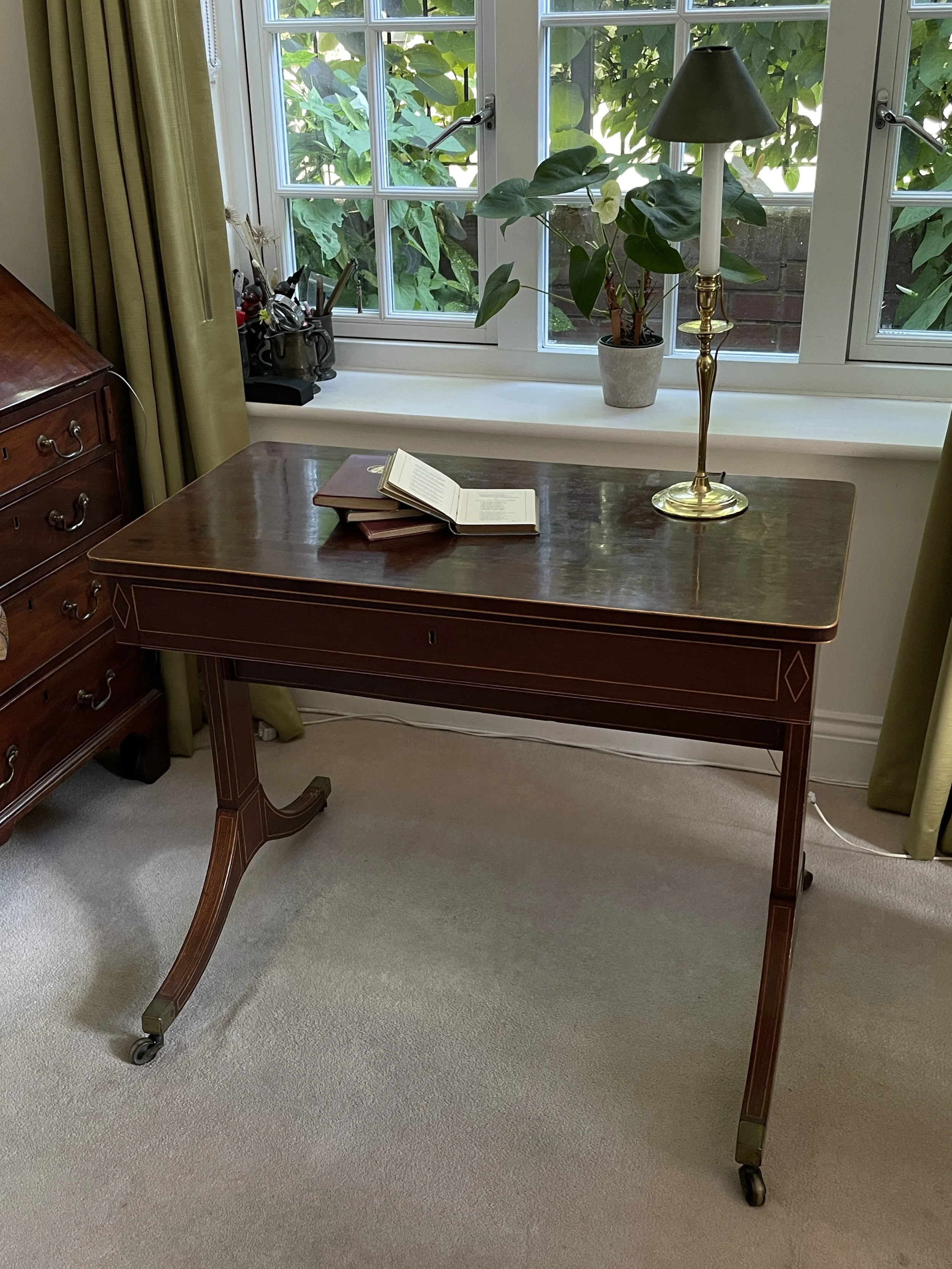
A wonderful and unusual late 18th century table. The overhanging top, with rounded corners, above a single full length and height cedar lined drawer, raised on standard ends with elegant splay legs terminating in brass cap castors.
The understructure mahogany is veneered onto beech and the top onto pine which is stained red; the whole decorated with box wood stringing throughout. Original working lock and key.
The construction and use of secondary timbers suggest Bermuda as the country of origin.
Circa 1780
Height: 28¼” (72 cm) Width: 35½” (90.5 cm) Depth: 19¾” (50 cm)
£4,500
Register Interest
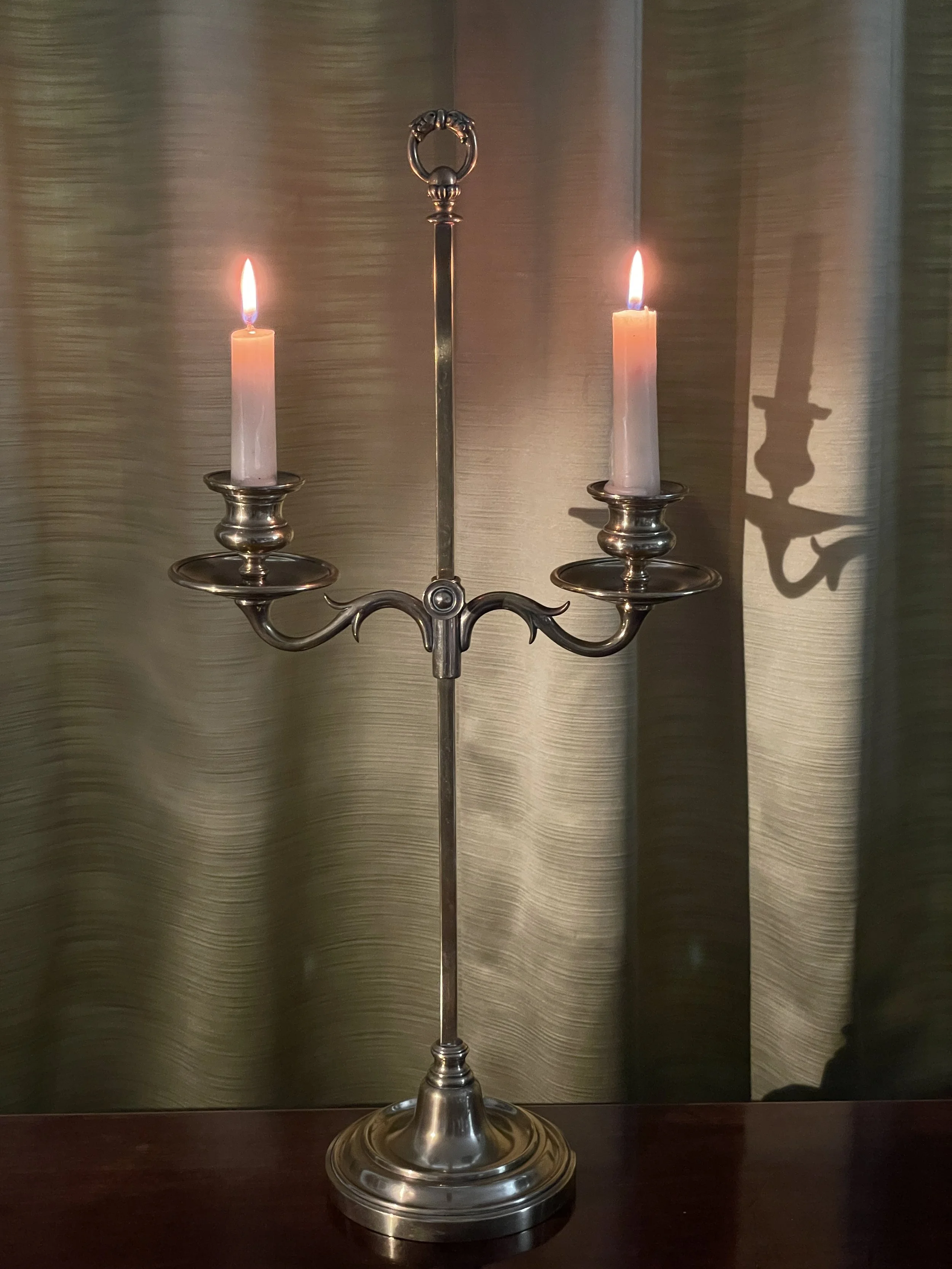
A handsome and most useful Georgian period two branch adjustable brass Table Candelabra, the central square section stem topped with a cast ring handle, on a circular moulded base and supporting two double eared and scrolling arms each terminating in campana shaped sconces and saucer drip pans.
A label to the underside of the base refers to a similar lamp in the American Museum in Bath.
Circa 1760
Base Diameter 5” (12.75cm) Height 21” (53.5cm) Overall width 10” (25.5cm)
Excellent condition.
£1,850
On loan to Benjamin Franklin House, 36 Craven St, London.
Register Interest

This exceptional George II period silver wine ladle represents the finest quality of Georgian craftsmanship, combining precious silver with the rare use of whale baleen - a material prized for its flexibility and elegance in 18th century luxury items.
George II Period Craftsmanship
A heavy gauge silver wine ladle of the finest possible quality, featuring a deeply lobed oval body attached with a forked and double scroll stem to accommodate the original tapering and spiral twist baleen handle. The sophisticated design reflects the pinnacle of Georgian silversmithing, when punch ladles were essential accessories for fashionable entertaining.
Maker and Provenance
Created in London 1742 by Thomas England, a respected silversmith of the Georgian period. The piece is engraved on the underside with contemporary initials: H over WM, providing fascinating insight into its original ownership and social context.
Specifications and Condition
Dimensions: Bowl Width 3" (7.75 cm), Overall Length 15½" (39.5cm)
Condition: Remarkably fine condition throughout for a Colonial era silver ladle.
Period: George II, London 1742
Maker: Thomas England
Perfect for collectors of Georgian silver, maritime antiques, or anyone seeking a museum-quality piece with exceptional provenance.
Price: £1,250 (approximately $1,550 USD - subject to exchange rate fluctuations)
Register Interest
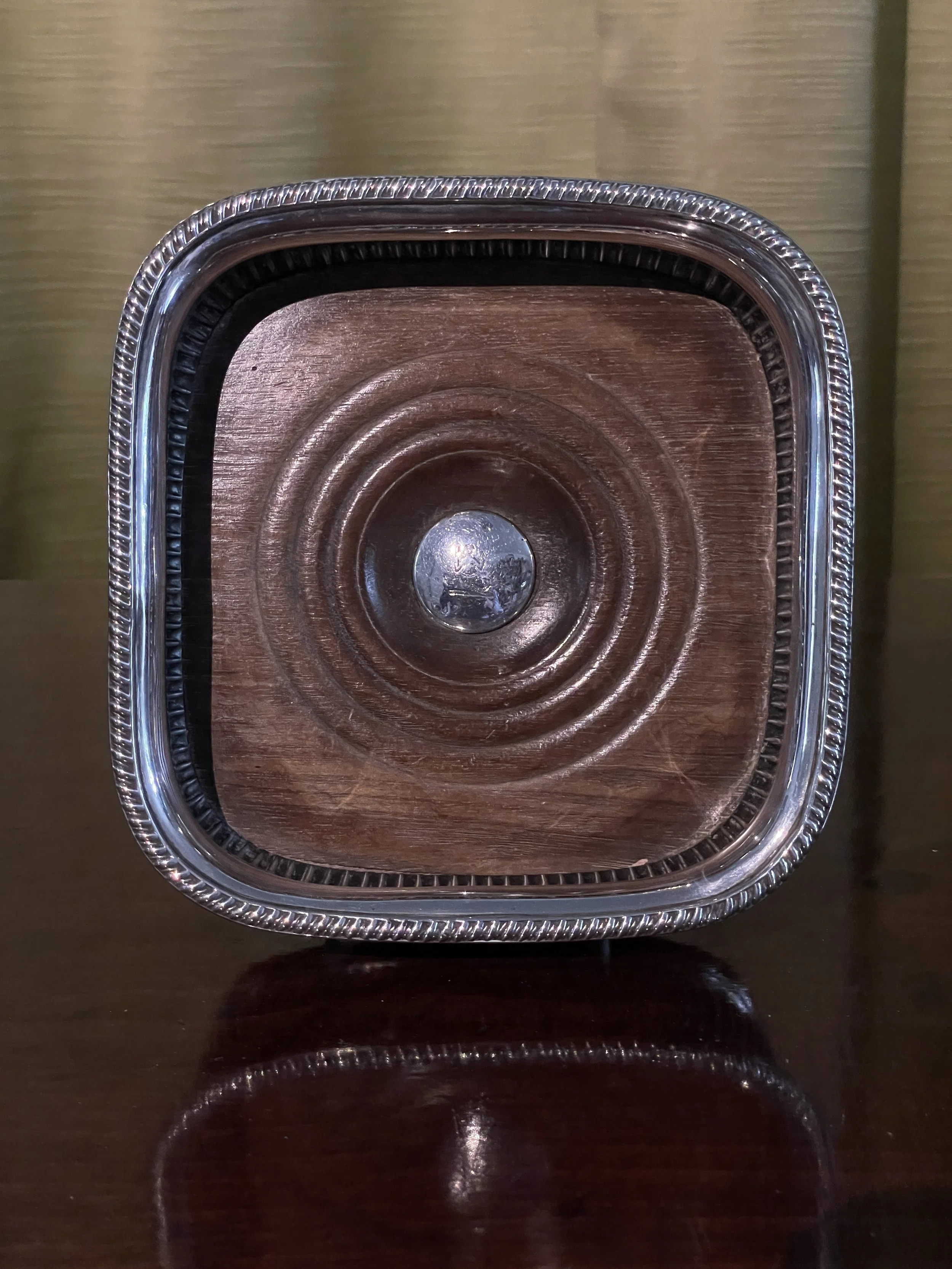
The only Georgian silver Square Decanter Stand we have ever handled, the lower part of the classic baluster body vertically lobed below an everted and spirally lobed border. The central silver boss to the turned wood base engraved with a figure of a mermaid, the crest of the O’Byrne family, immortalised in the song “Follow me up to Carlow”.
Sheffield 1808 by W. Tucker & Co.
Width 5¾” (14.5 cm) Height 1¾” (4.5 cm)
Condition: Excellent throughout. Felt liner to base replaced but not new.
On hold
Register Interest
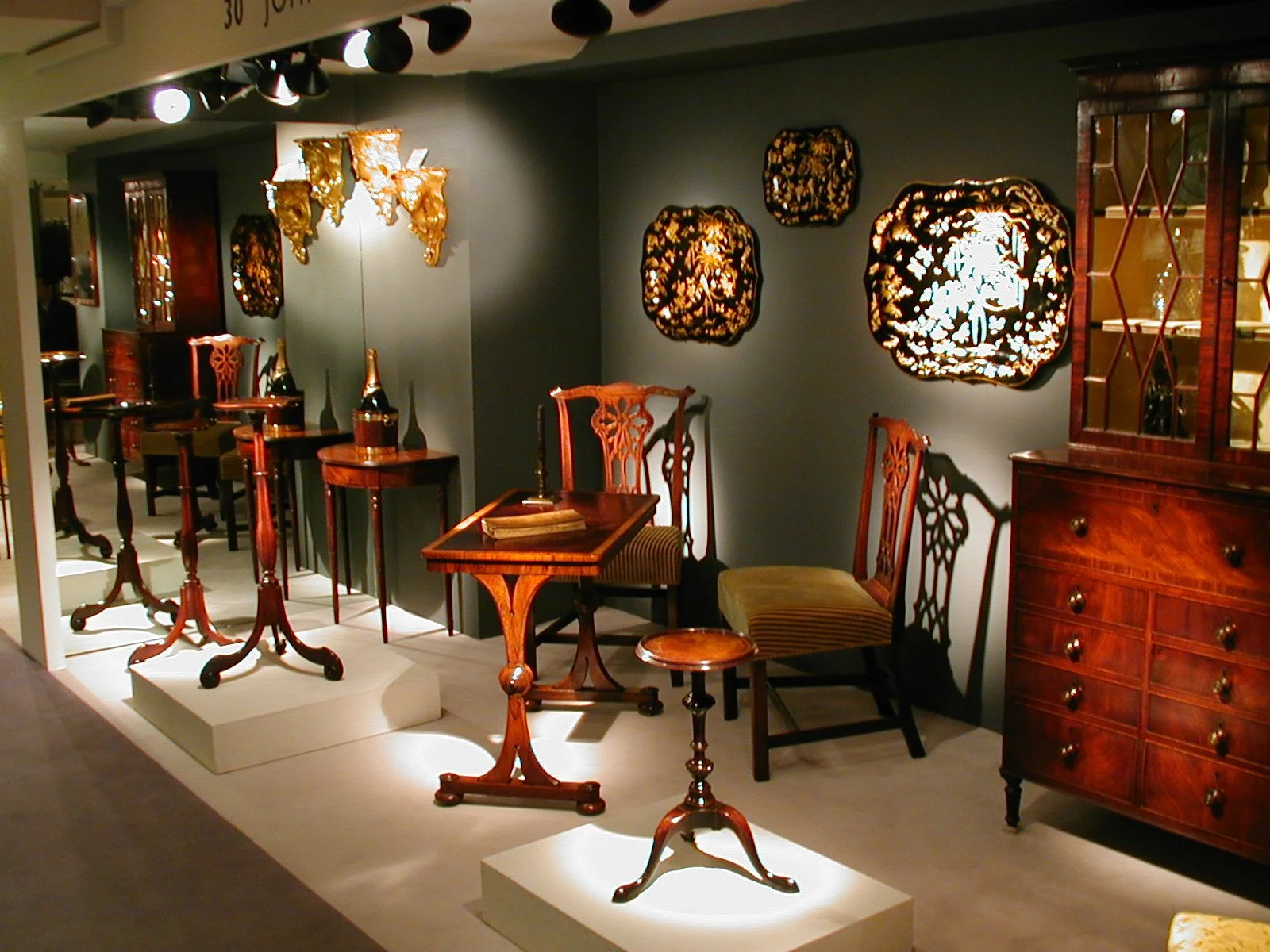
We are actively seeking good quality 18th and early 19th century furniture and decorative arts so please get in touch if you wish to sell anything of that ilk.
To include glassware, silverware, Old Sheffield silver plate, metalware, tapestries, sculpture, mirrors and furniture.
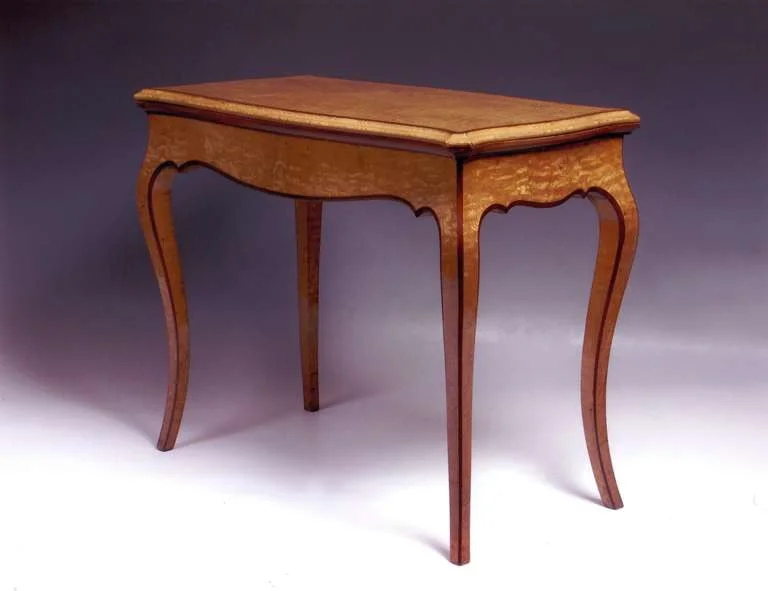
A fine swivel top card table decorated throughout with Hungarian Ash with borders of Purpleheart and Ebony stringing. Stamped by the London makers Holland & Sons and retaining the original cast and chased gilt metal candlesticks which are stored inside the top when closed.
Fomerly in a private residence on manorial land at one time part of the Rothschild estates in Hertfordshire.
Circa 1860
Height: 29 inch (74 cm)
Width: 36 inch (91 cm)
Depth: 18 inch (46 cm)
£14,500
Register Interest
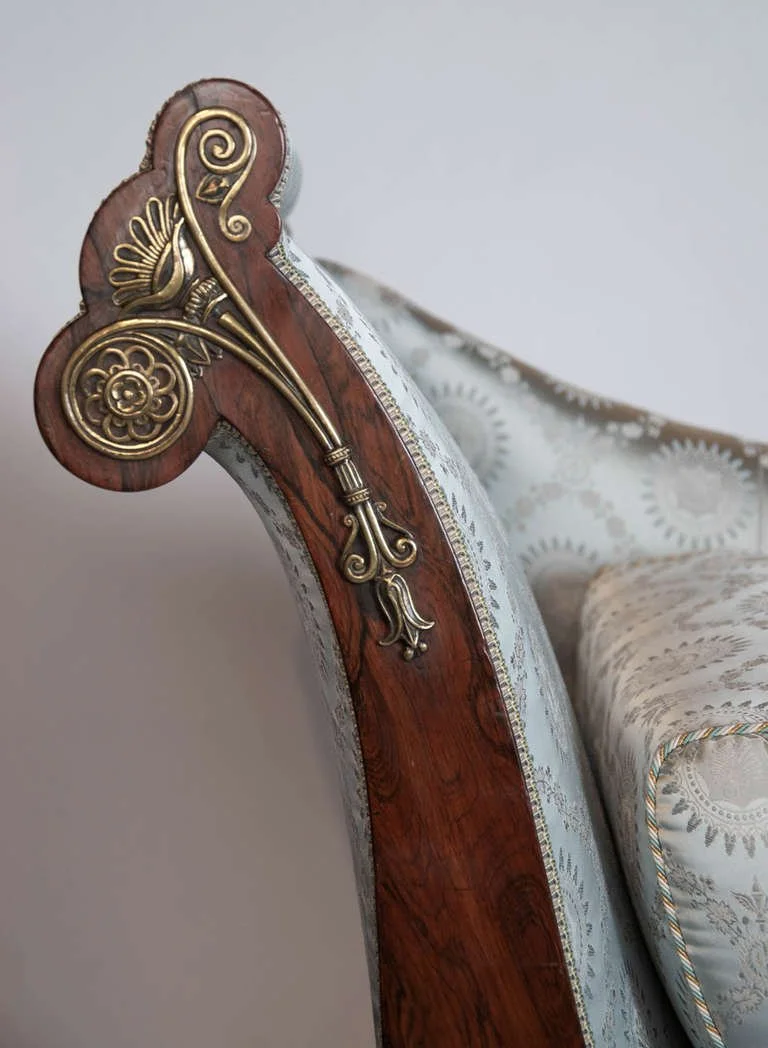
A Fine, Rare and Important English High-Style Regency Period Library Couch in Rosewood with Gilt Metal Mounts in the Manner of George Smith. Decorated all round this exceptional piece is intended to stand in a central position. Retaining its original upholstery, cushion and pad, re-covered in Lelievre's Lampas Directoire Bleu, conforming precisely with that of the period. Ref: George Smith’s Collection of Designs for Household Furniture Plates 40 - 65 & Ackerman’s Regency Furniture & Interiors Plates 1 & 25
Circa 1815
Height: 37.5 inch (95 cm)
Width: 84 inch (213 cm)
Depth:27.5 inch (70 cm)
Register Interest

Numbered 6, this lidded oval canister painted and decorated to depict a Chinese figure with trading goods in front of a ship all within a Greek key pattern border. An oval label to the reverse: "Bartlett & Sons Ltd. Welsh Back. Bristol."
"Japanner of Grocer's Tea Canisters" John Bartlett was born c.1825 in London. By 1852 the firm was called J Bartlett & Son, and in 1880 it was listed at 2 & 3 Welsh Back, Bristol; in 1910 the firm was taken over by Henry Pooley & Son of Birmingham, who were in turn taken over by W &T Avery in 1914.
Circa 1880
Height: 17 inch (43 cm)
Width: 10 inch (25 cm)
Depth: 7.5 inch (19 cm)
Condition: There are a few signs of use and wear commensurate with age. Some areas of painted decoration have been touched in over the years, particularly to the Greek Key pattern. There are some chips and scratches when the lid is removed and a dent to back shoulder, all as shown in photos.

Attributable to George Bullock with design features similar to a table of Thomas Hope, illustrated in the book on “Thomas Hope by David Watkin” pl 98, page 227, and now in the Ashmolean Museum in Oxford. A wonderful pollard oak chess table with specimen marble top and faux bronze applied decoration. The octagonal marble set into rectangular top supported by inverted lyre shaped standard ends joined by a turned stretcher, on concealed castors. There is a single divided drawer for chess pieces. Much like the taste for faux rosewood paint effects of the day the applied acanthus, gadrooning, frieze, rosettes and claw feet on this table are patinated plaster to look like bronze.
Circa 1810
Height: 30 inch (76 cm)
Width: 31.5 inch (80 cm)
Depth: 22 inch (56 cm)
£9,500
Register Interest
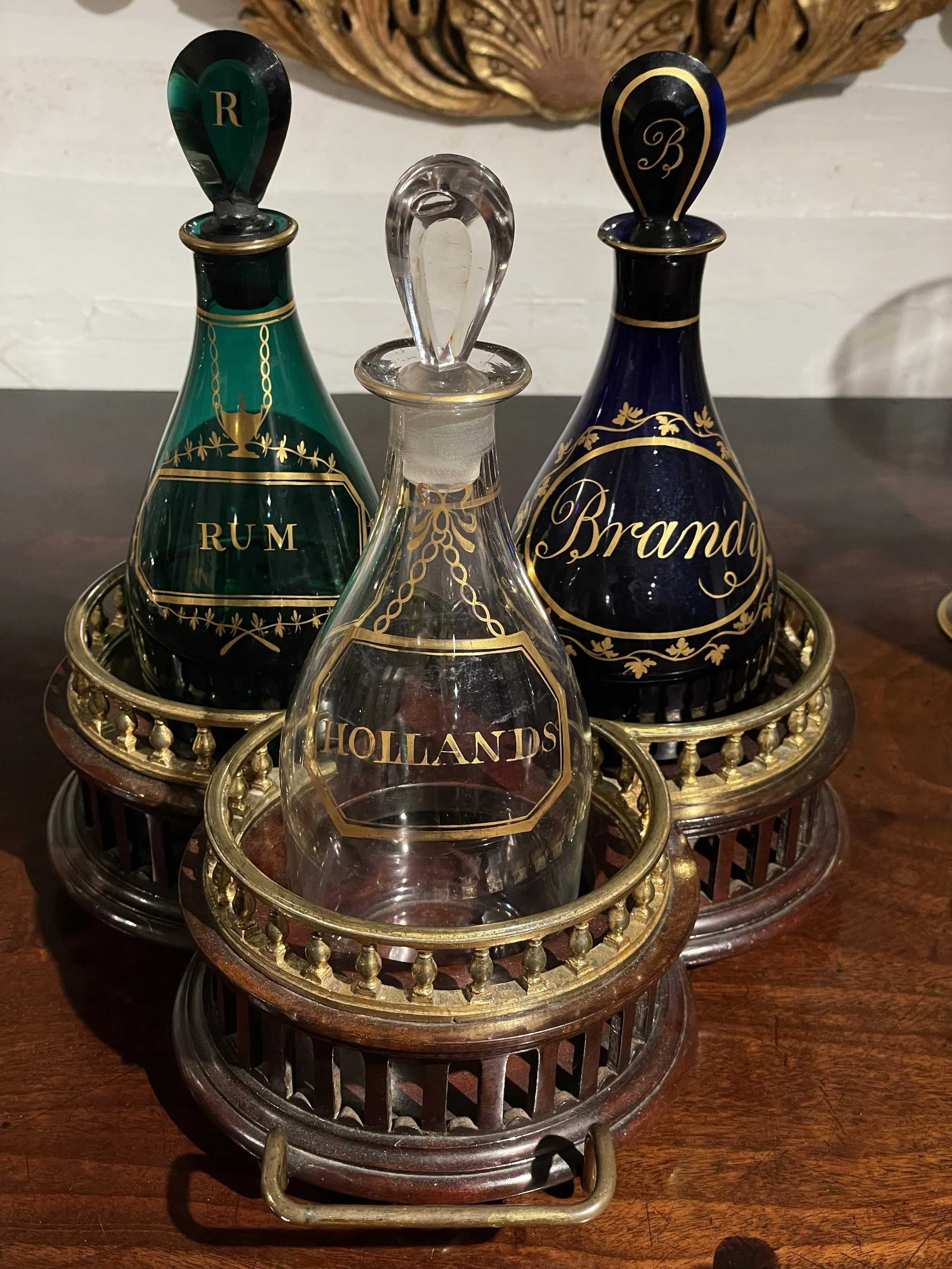
The base surmounted by a gilt metal balustraded gallery with side handles and three bun feet.
Circa 1895
Width overall 13” (33cm) Height 4” (10cm)
£650
Register Interest

A superb and large mid 19th century mirror.
The fine moulded gilt slip surrounded by carved and painted frame with gilt plaster floral swags and festoons with bows centre and corners. Could be placed above an overmantle or on the floor.
Circa 1850
Height: 75" / 190.5 cm Width: 69" / 175.5 cm Depth: 4" / 10 cm
£12,500
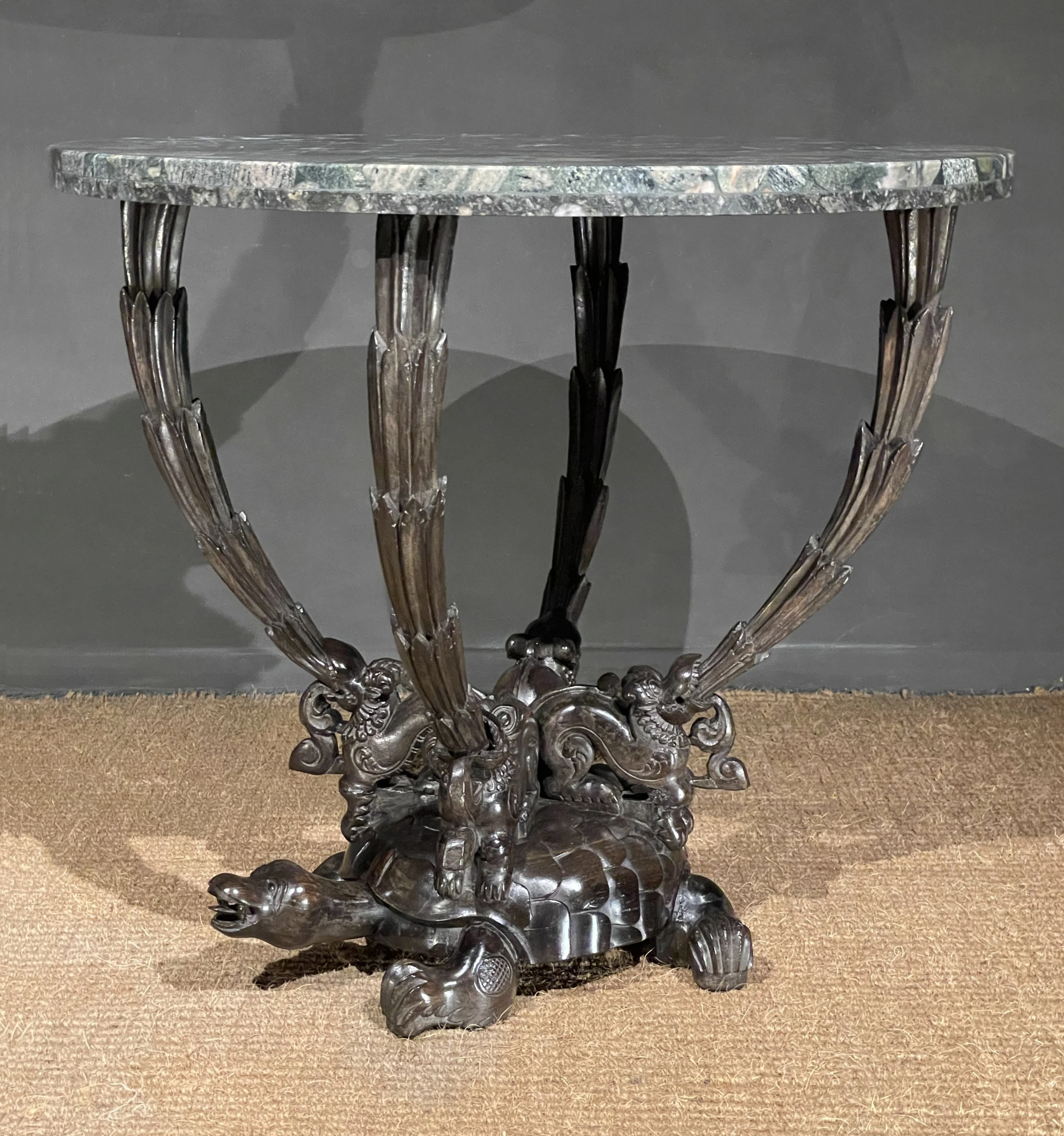
A rare and captivating carved ebony centre table, the base formed as a tortoise supporting four Foo Dogs from the mouth of each comes a stylised foliate branch rising to hold the circular Verde Marinace marble top.
Given the combination of these traditional and narrative elements, present in the mythology of both Ceylon and Burma since the 4th century and more particularly to the West in the later days of the Empire of The Great Moghal (1526 – 1857), we date this table to the early part of the 19th century prior to the Empire’s demise and give it Myanmar-Sri Lankan provenance.
Height: 27¼ inch (69.5 cm)
Diameter: 30½ inch (77.5 cm)
£6,500
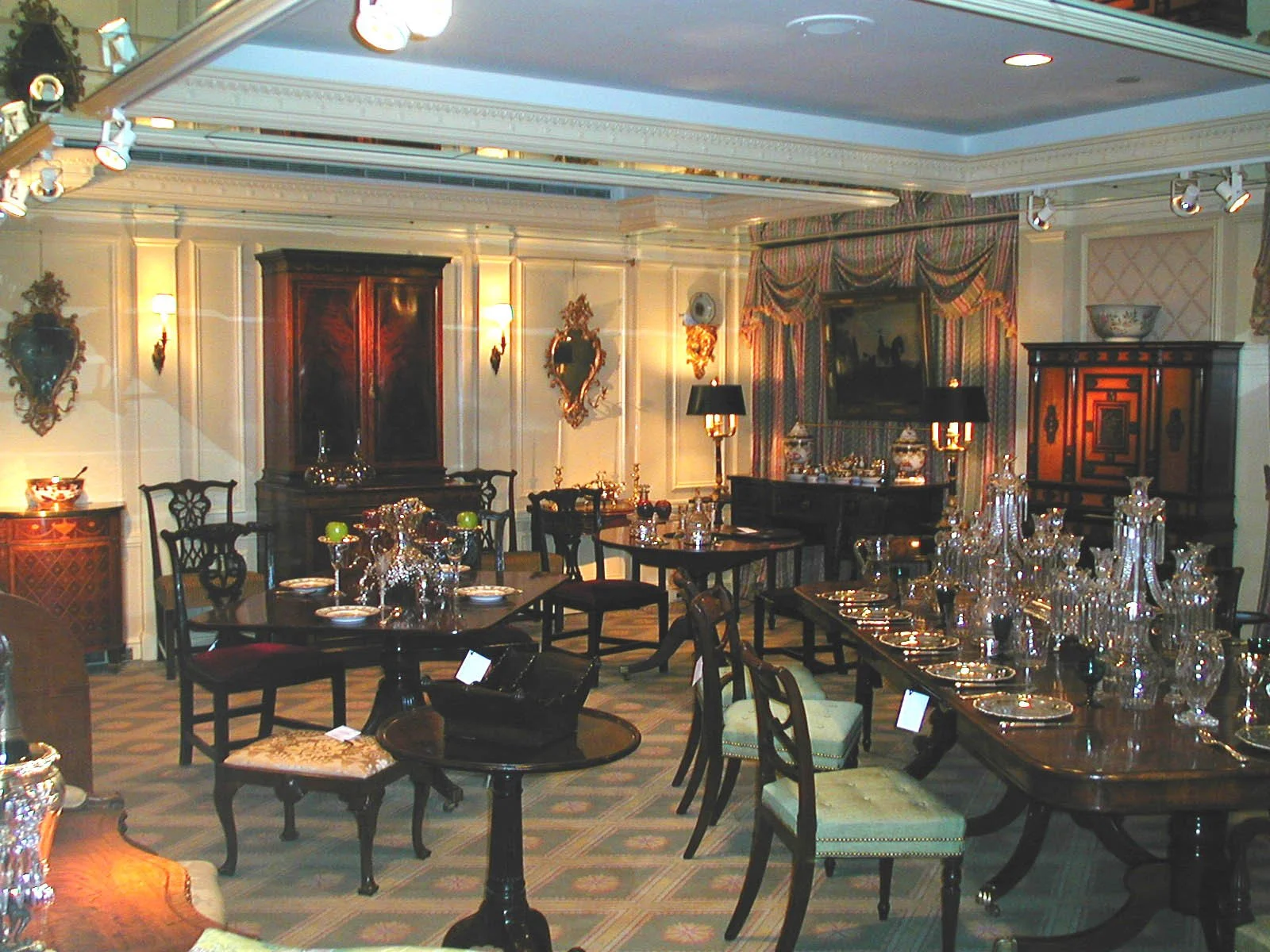
Backed by more than a century’s experience, our Valuation Department is well equipped to prepare authoritative valuations and appraisals for all purposes including probate, insurance and family division of single items of furniture and works of art as well as entire household contents. This service comprises of site visits, detailed inventory including photography, preparation of presentation disk and printed copy.
Please send us an email for costs and further details.
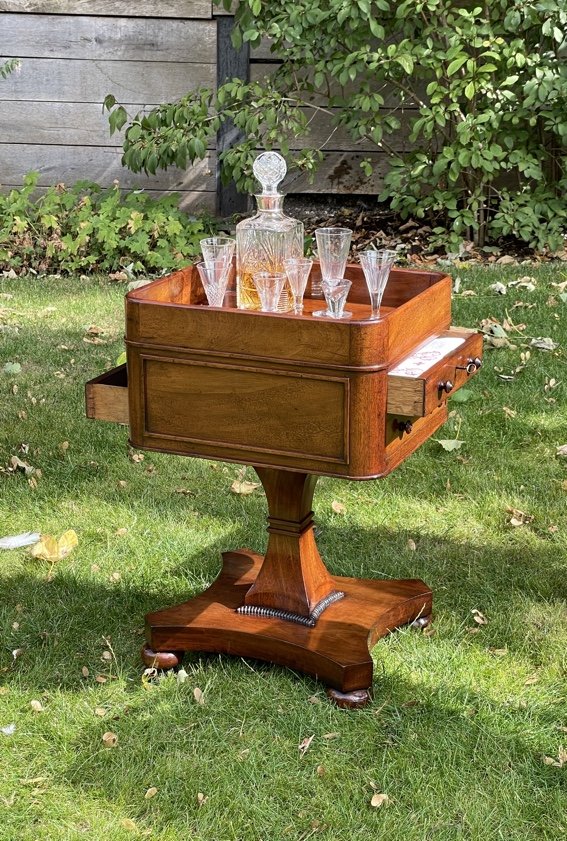
The top with raised gallery edge over two drawers, one each side with working locks and key and opposing dummy drawer fronts, supported by a square section banded geometric column with gadrooned moulding on a platform base with bun feet over concealed castors. A most useful centre, lamp or cocktail table.
Circa 1830
Height: 26½ inch (67 cm) incl. 3 inch (7.5cm) gallery
Width: 18 inch (46 cm)
Depth: 16 inch (41 cm)
Reserved
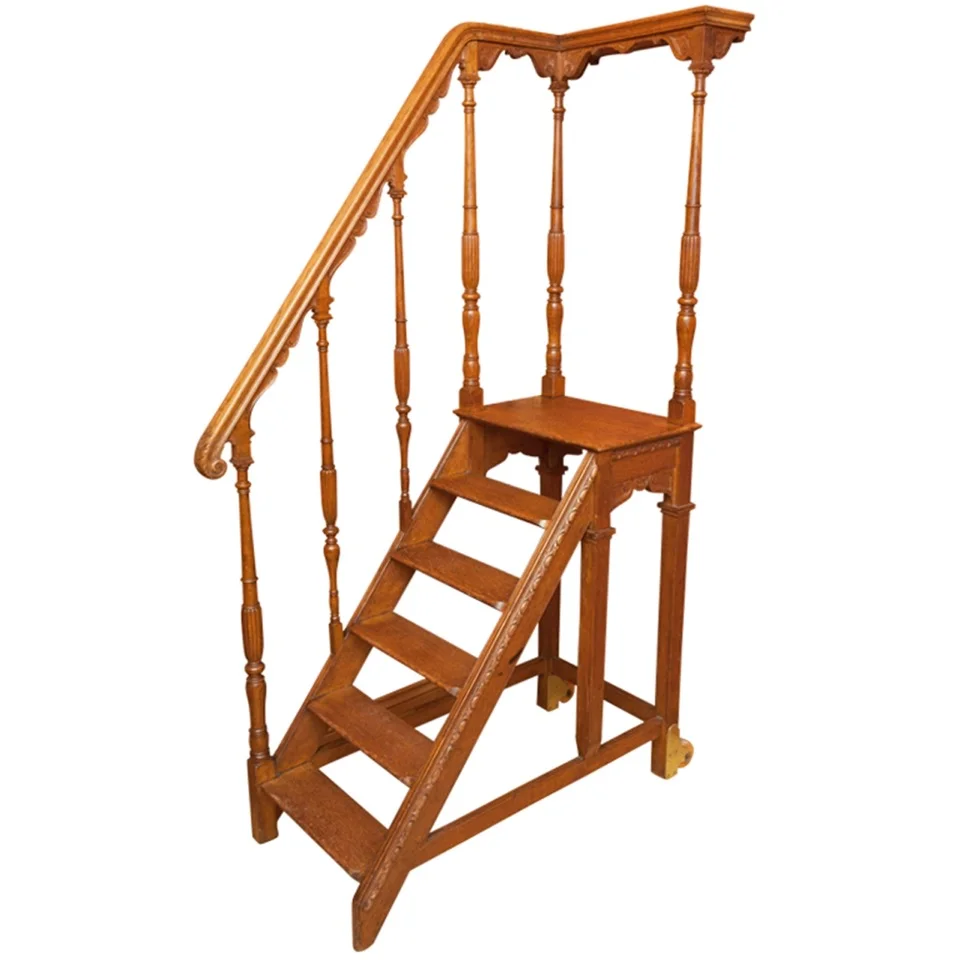
An Important set of Library Steps made in Oak for Gonville and Caius College, Cambridge, circa 1840. Of fine golden colour they display in all carved elements the hand of ecclesiastical as well as secular craftsmanship typical of the first half of the 19th century, with free flowing curves and scrolls executed with flair and a natural feeling for the timber restrained only by the disciplines of the period. In excellent condition throughout they retain the original castors and are surmounted by a book platform as decreed beneficial by Thomas Sheraton.
Circa 1840
Height: 76 inch (193 cm)
Width: 21.5 inch (55 cm)
Depth: 43 inch (109 cm)
£14,500
An extremely fine and rare Hall Seat for two, the rosewood frame moulded and carved with traditional emblematic motifs supporting the fully upholstered seat and back.
From Southern India, circa 1780 – 1820."
Height: 32” /81.5cm Seat height: 16” / 40.5cm Width: 36” / 91.5cm Depth: 26” / 66cm
By repute part of the furnishings of Studley Royal House, once the home of George Robinson, 1st Marquess of Ripon and Viceroy/Governor-General of India 1880 -1884. (The house was demolished in 1946.)
Interestingly Indian craftsmen adapted European colonial demand for chairs, sideboards, cabinets, and raised beds and applied heritage narrative detail such as the exquisitely drawn ‘winged’ brackets or Yali, a mythical animal combination creature representing a safeguard to the spirit and the home, while replacing the European/Chinese Claw and Ball foot with a carved Lion’s Paw – Simha Valli - which further symbolises defence, stability and prestige. (See images of an Indian Games table for reference.)
Register interest
< BACK TO SEATING & BEDS